
“A musician must make music, an artist must paint, a poet must write, if he is to be ultimately at peace with himself.” Abraham Maslow
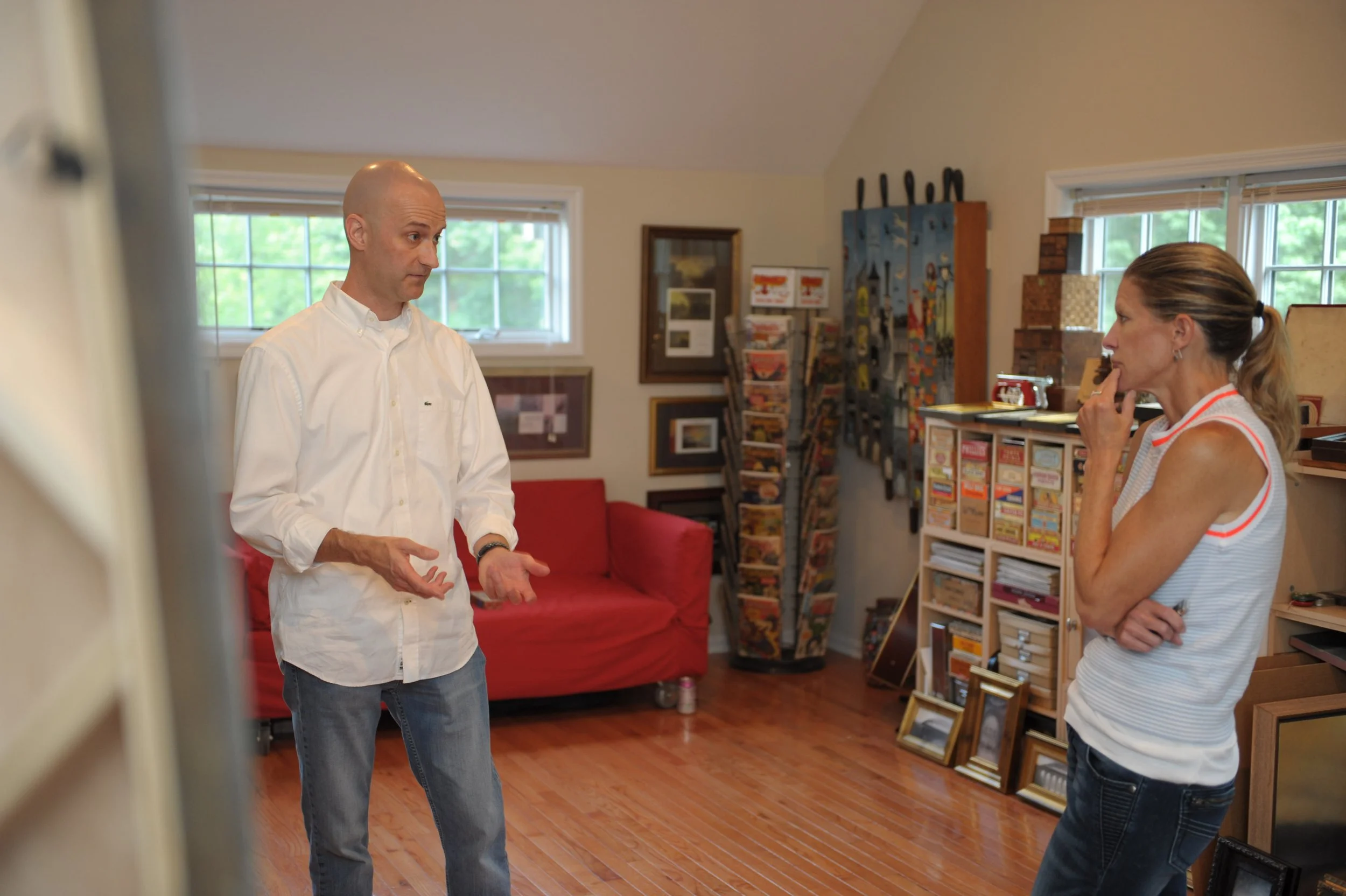
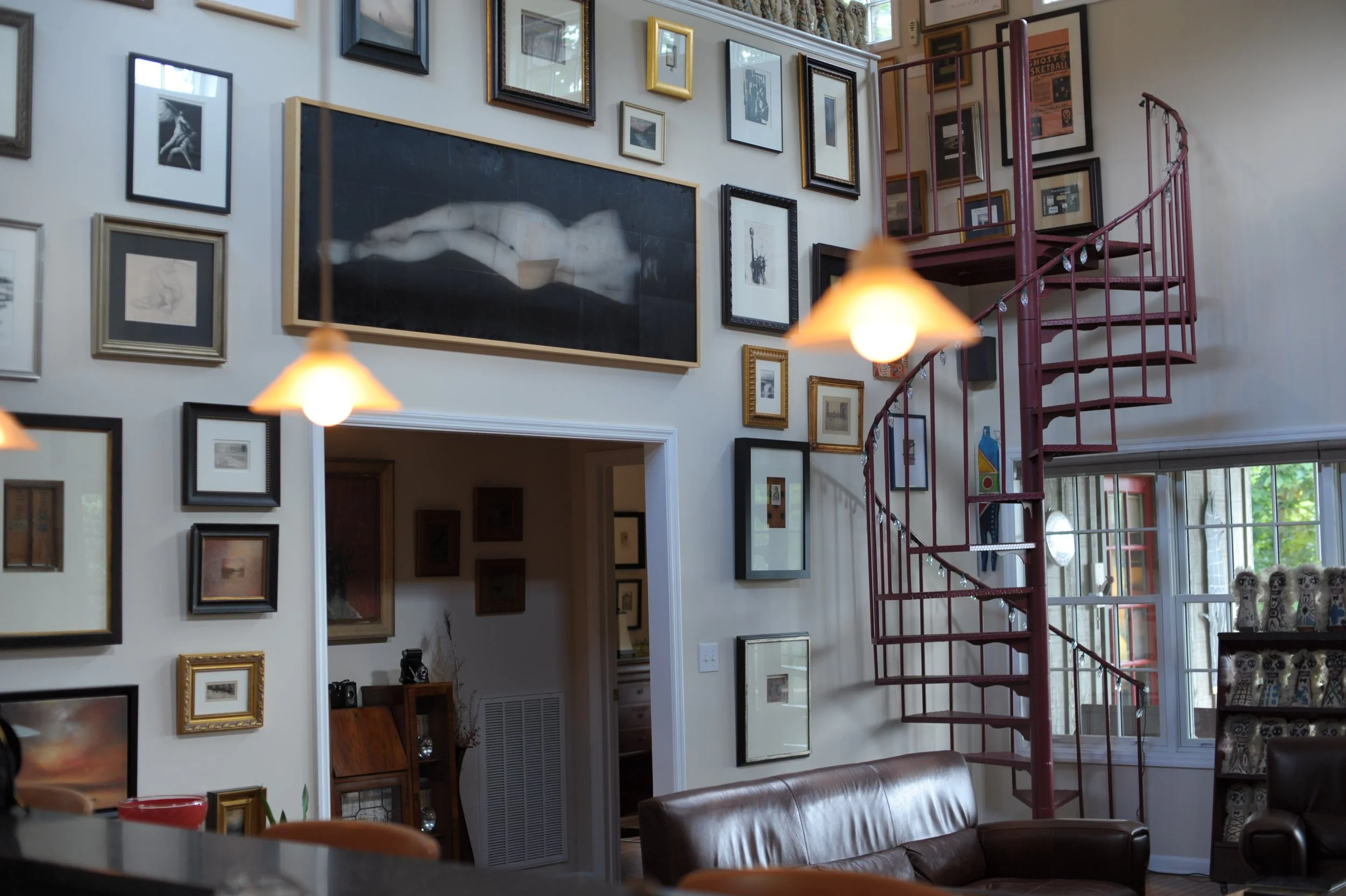
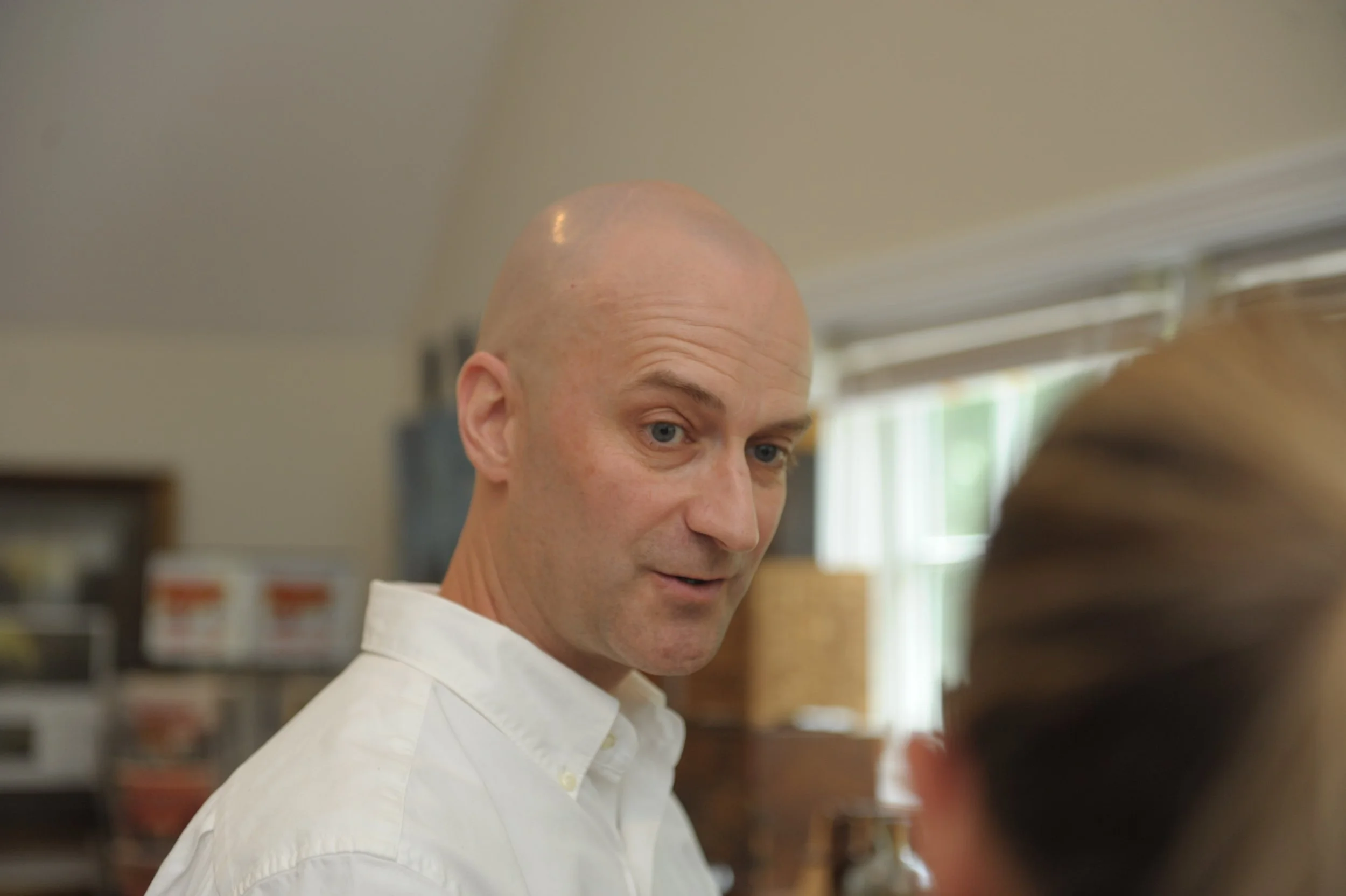
Scott Hill’s insatiable desire to make things calls to mind the notion that humans have an intense desire for expression (Prinzhorn, 1972). Hill’s commitment to his authentic intention for creating guided him through various junctures in his artistic journey. Hill relates to his creative process much in the same way he invites his viewers into an observer role with open interpretation. According to Furth’s focal points assessment, art therapists “should follow the trajectory of moveable objects, weapons, and people, note their direction, and determine what the consequences will be” (1988, p. 80). One can follow the trajectory of the figures in Hill’s paintings into the abyss of uncertainty and mystery, suggesting a narrative of transformation and altered perspective when considering the canvases of the repurposed objects.
Scott E. Hill


Biography
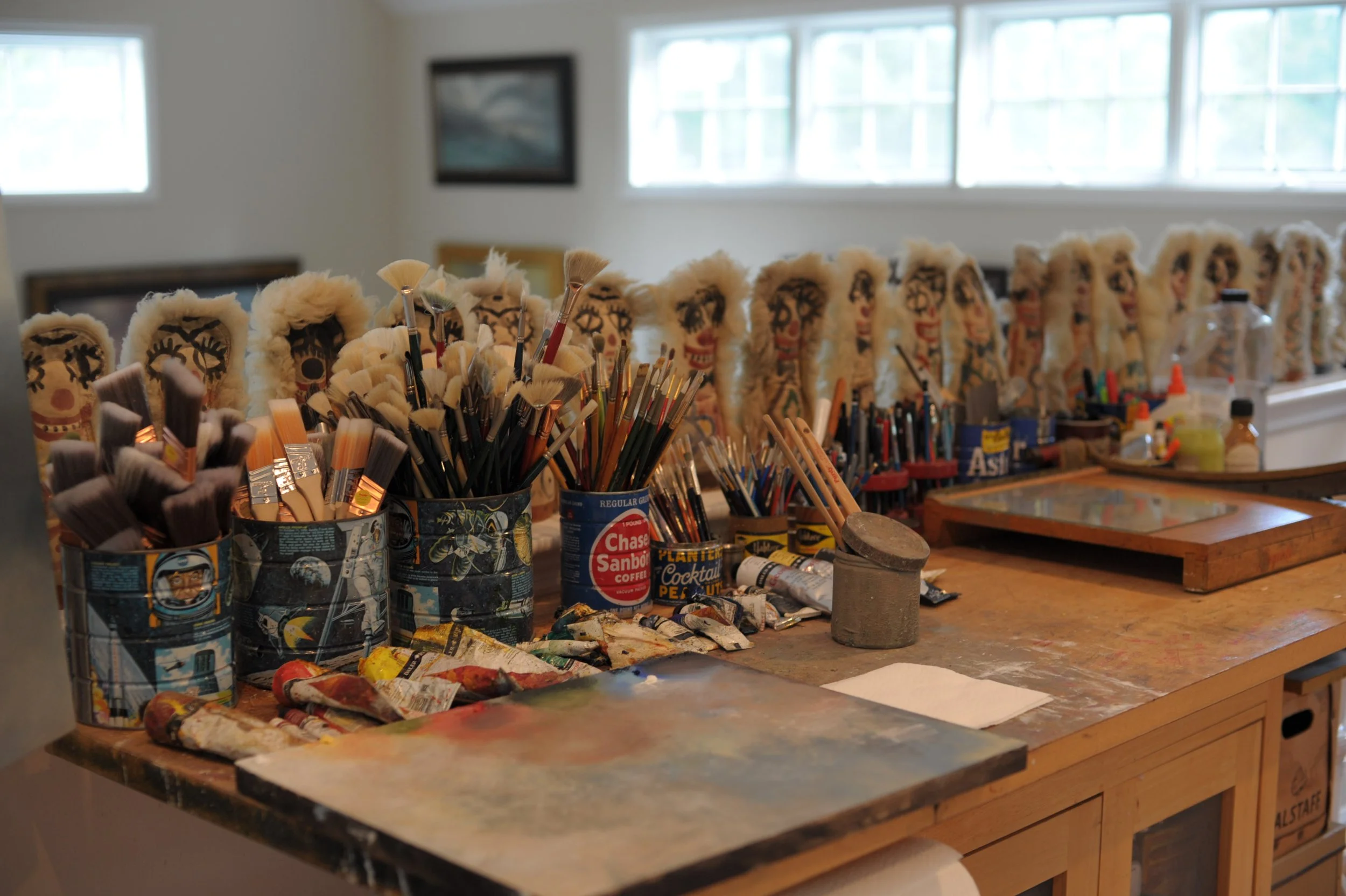
The work of artist Scott E. Hill is at once old-fashioned and sophisticated. Drawing from memories of his childhood in Northwest Georgia, a place he went or a color he saw could be the catalyst that sets the process in motion. His paintings are reminiscent of a long-gone style found in the brooding landscapes of 16th Century Spanish artists and the shadowy, gilt-framed works of 19th Century Romanticism.Landscapes are a favorite subject for Hill, and the richness and texture of his work are the results of layering his paint and using an age-old technique called "glazing." Glazing involves brushing linseed oil, turpentine, or varnish over a layer of paint, which allows the colors underneath to bleed through and gives the work an aged appearance. Although he works primarily with oil, Hill also experiments with watercolors, coffee stains and oil pastels, and has an impressive body of graphite drawings as well. Regardless of medium, a limited palette and a skilled hand convey a certain mood...much the same as that sense of tranquility that follows a summer storm, as well as the quiet violence that precedes it.
Video
The Interview
-
Scott: And I wasn't a good student-
Speaker 1: I was a great student in college.
Scott: Yeah. Big difference. And I wanted to ask you, with the 11 people that you chose, how did you find us? How did you find me?
Speaker 1: Great start.
Scott: Okay that was-
Speaker 1: So I had, my phone's downstairs ... I went to an opening of O.M. Norling. His name is Jay Wilson. He has a pseudonym. And there was a picture, a eight foot by five foot picture of this bear with an antique couch, and hat boxes, and it was meticulous, like the hair on the bear. And so I got into a conversation with him. He's just dad in the neighborhood. I know him as Whit's dad, because he's our kid ... so I started talking to him about, “How does that happen? How do you go from dad, that manned the tug-of-war station during the field day to this guy who isn't in a gallery?” His wife is a event planner, put on a show for him and he sold everything. His bear painting went for twenty thousand dollars.
Scott: Holy moly.
Speaker 1: He has a lot of stuff this size, fifteen thousand, like that, sold it all. And when he got to Atlanta, he did the whole slides to the galleries with the statement and did the whole solicitation thing. And didn't get any bites. Now, he's like, “Sorry, I don't need to give you half, I'm fine.” So that was the background. The conversation was, how do you go from that to this? When do you do it? Then we started talking about ... and this is where the book came from. Everybody's got a little stuff their drawn to, like sleds, antique stuff. Tatiana has different video games.
But everybody has a little bit of a compulsion of something that they like. And then inside of that, there's an expression of that. But the way people treat artists, makes it so far apart that people think they can't get there. Because it's not gonna be in a gallery, or it's not gonna be heralded. I'm afraid to expose that because it's the steeper part. So what I'm trying to do, is get people to see stories of people who, you got a shirt on, two arms, two legs, two feet. You started somewhere. So these are all gonna be the stories of, what took, only child, raised here, UGA, to that brilliance. How did that happen? And that's what we're gonna talk about. So that's how it happened. I started talking to Jay, and then I started looking at-
Scott: Do you want to sit?
Speaker 1: Sure.
Scott: Or maybe go downstairs, upstairs? It's cooler down there.
Speaker 1: Yeah. Upstairs. Upstairs.
Scott: Okay.
Speaker 1: Then I started looking at other artists online that I felt like ... Remember that one page I sent out initially of all the criteria? You're prolific. It feels like you can't help yourself, like you make work? You weren't so full of yourself that I couldn't get in touch with you, yeah. So there was just this little kind of sweet spot that you guys are in galleries and that's how you make your living, but you're not so ... Yeah, you're above that. So there's still a tangibility to you that I want to draw out so that someone can go, “Okay, I might try, I might pick up the brush, or the clay, or the wood, or the whatever.” And that's what I want to do is give that access or permission, so that people can try.
The validation for it for me was, all of you said yes. Everyone.
Scott: I was just scared, not because where you're coming from, but because what I would give you. I'm not good at this. I'm always just like-
Speaker 1: All of you say that. All of you say that.
Scott: Okay. And the picture thing, I've got on here, just going aw, ah.
Speaker 1: You will love the pictures. You will love the picture. Calvin, who is somebody, he's in San Francisco. We went out there two weeks ago, Calvin Maw, he does these ... His whole art started because he's awkward. And so he started expressing himself through these figures, because he played with stuff when he was young and he would express. His whole art is based on that. He's like, “I'm inarticulate. I can't do it. I can't do it.” Brilliant interview, beautiful pictures. You're just talking about ...
Scott: I just like making things. I mean that's just-
Speaker 1: So that's usually where you start.
Scott: Okay. [crosstalk 00:04:23] Yeah.
Speaker 1: Yeah, okay. So Scott's born. Scott does what every other kid does. You make things out of crayons. You take crayons and you color. Start talking to me about when it felt different to you.
Scott: Well, going further with what you just said, I grew up in a little town right down the road, New England, Georgia. And I lived in a little house and next to a little church. Always it was so small and it wasn't really used as a real church, but I just would draw on the front porch of the church. I would sit outside. I can remember just sitting and drawing. And I liked to make things. I prefer to draw, but I like to make things. Like the junk drawer of the house was my favorite thing to go through. And I would take things and glue it together and tape it together. But I liked to draw and I'll repeat this which I've said before, my parents kept saying, “You'll be an inventor.” Because I was always making things. And I wasn't a good student, or I wasn't a good test taker. Like with mathematics and different things like that.
It was just horrible. With school, if you gave me enough time, or anyone enough time, you can memorize anything. You can memorize sections of the phone book. It doesn't mean you're learning. So I just wasn't good with test taking, so. Anyway, I looked forward to drawing art. If at any time there was crafts-
Speaker 1: That was your ... Hold on one second. Hold on one second. Hey Angela, Angela, Angela.
Angela: I'm listening.
Speaker 1: Oh, your voice is carrying a little bit and I think it's going ...
Angela: Oh, I'm sorry.
Speaker 1: It's okay.
Scott: It's Tanya's voice. [crosstalk 00:06:03].
Speaker 1: Well, both of you guys.
Scott: She doesn't believe me that sound rises. She watches TV. But I always made things and I-
Speaker 1: You looked forward to drawing. You were-
Scott: Yeah. I looked forward ... I didn't get to take an art class until I was in fourth grade. You had crafts, kindergarten through-
Speaker 1: I love how you said that I didn't get to.
Scott: Yeah. I loved it.
Speaker 1: So you knew early on that was-
Scott: I just wanted to make things. I mean, period. I just wanted to make things. But you didn't get to or you just did your crafts. And I looked forward to it.
Speaker 1: Will you say there for a minute, “I didn't get to.” Parents wanted academics-
Scott: No. No.
Speaker 1: -or was it just that you didn't have ... you did it in school.
Scott: Yeah. Just in school. I mean, my dad, he worked a lot. He would bring home boxes of papers, and the drawings that are in the hallway. I'm sorry-
Speaker 1: Oh, Scott-
Scott: I'm emotional, 'cause of my mom all this ... I'll tell you how to do this, I was thinking back to simple, real simple. Anything-
Speaker 1: Which is why you like blocks and-
Scott: ... yeah. If you could, don't say anything about it 'cause my mom's real proud with what's going on with my summer and all that.
Speaker 1: You'll see it before it goes.
Scott: Okay. Okay. But we were in Atlanta Monday, but it's just a constant thing. It's always right there. But I made things from paper [inaudible 00:07:17] he would being home I remember he went to get mom, and I was born right after on the GI bill he was taking school and going to work, and he would bring out this huge boxes of paper, and I'd always draw on the back, and a lot of the stuff you could see would be his tests, or his work stuff you can see through it and I was drawing the church that next door, my neighbors house, our house, Wizard of Oz, all kinds of stuff-
Speaker 1: What was it, what was it ... what did you see in the house with the church of it-
Scott: ... I just draw what you see and this was my surroundings even in college we ... the art studio was right next to a cemetery and I can remember I was drawing cemetery work and people were like dooming glooming ... that's what I see-
Speaker 1: Yeah and it doesn't have to be, that's your interpretation-
Scott: Yeah its just what I'm seeing there and next to the house that I grew up in was a train tracks so I trains and they're still coming out today-
Speaker 1: And that vista is still-
Scott: Mm-hmm (affirmative). I'm looking for it across that ... going across, but I just like to make things, and I remember when I finally got to take a real art class in 4th grade I was so nervous and so excited, and I took art every year 4th through 8th grade, and then in high school you only got 2 art classes basic and advance, and I remember I intentionally spread it that I was so excited I took it 9th grade and then I saved it till my senior year and did that, and it was primarily drawing which was great you know with somewhat colors but I love to draw.
Speaker 1: What was ... I'm just digging in a little bit-
Scott: ... no that's fine.
Speaker 1: ... how did you feel when you were doing that? It sounds like it was what you look forward to.
Scott: It was like recess. I mean for other people I couldn't understand why they were dreading drawing, and then I loved it. I loved to make things and then I made-
Speaker 1: Did you judge what you did as a kid ... like did you hold it up as what you saw or just said that's that came out?
Scott: I can remember in 3rd grade there was one of my best friends. Have you ever heard of Nancy and Norman Blake?
Speaker 1: No.
Scott: Musicians they're folk or bluegrass musicians they're phenomenal. O Brother, Where Art Thou-
Speaker 1: Oh course.
Scott: ... he sang you are my sunshine-
Speaker 1: Yeah.
Scott: ... that's Norman Blake, so his wife Nancy, my best friend when I was little was Joy Levine and she ... I thought she was phenomenal she could draw and I can still remember in 3rd grade she drew like a campfire and instead of drawing squiggle lines for fire she had the sticks crossed, that were 3 dimensional, she had the fire coming up and I would just watch them draw and ... but I would do it too and try to learn ... but it wasn't that I was judging myself I was always looking ... basically there was always someone better-
Speaker 1: Right.
Scott: ... that doesn't mean you're not good or you're bad or anything. I just really wanted to learn and to make-
Speaker 1: So it came out-
Scott: ... yeah and that's-
Speaker 1: ... and then what did you do with it when you were done, did you show someone, did you just keep it?
Scott: ... they would hang it maybe in the hallway or hang it on the refrigerator kind of thing. I will say this I got in trouble in 3rd grade kids we started a arts' class and Joy Levine was in on it too and we would sell our drawings. I've already told this story before-
Speaker 1: You were so [inaudible 00:10:12]-
Scott: Yeah. They had tin set candy in the principle's office and you could buy pencils, you could buy paper, or you could buy these candy sticks which my mother never gave me money for 5 and 10 cents so miraculously all of our drawings were 5 and 10 cents we would go buy the candy sticks-
Speaker 1: Candy sticks.
Scott: ... so I got in big trouble. I never ... you know I just wanted the candy-
Speaker 1: So it wasn't about the you drew the thing to capture it to have it, you just drew it to get [inaudible 00:10:38]-
Scott: I'd have to make the things and then in high school I can remember people liked it and you know the drawings that I was doing-
Speaker 1: How'd you know?
Scott: ... they would ask me to do their class reports or in French class draw their Christmas cards for them you know and different things like that, but there was another student named Johnny, and he was phenomenal and everybody would look at his work and just ... I remember he could do left-handed drawings that were just phenomenal and he was right-handed it just blew me away how good he was so I just liked to really make things.
Speaker 1: So that's your in the hallway Scott-
Scott: Mm-hmm (affirmative). My mom just moved from my childhood home to her dream home about 4 years ago and she had my Letterman jacket, my boy scout outfit, she had a box of drawings and photographs and I was just amazed flipping through it and it was just flash, flash of things that I hadn't seen in forever like the church next door, or my kindergarten where I went, I went to a small church kindergarten and the swing set that was behind there and there was a big tree that we would all ... that had fallen we'd all climb on it. I had drawn all that stuff and it was just memories going-
Speaker 1: It means something to you-
Scott: Yeah.
Speaker 1: ... you saw it and it went it, you adjusted it and then it comes back out and when you're-
Scott: ... mm-hmm (affirmative), and it still with the train. I mean a lot of people don't know who I am, but I'm the guy that paints trains and the reason why I grew up next to a train track and it still comes out that way so-
Speaker 1: So your however old ... let's say 10 and you walk outside and there's the train are you feeling anything? Is it ... because you said you like to make things-
Scott: ... mm-hmm (affirmative).
Speaker 1: ... that's already made and it's a vista, but you wanted to capture ... tell me a little-
Scott: I think probably I font know why I was drawn to. ... I will say this I liked riding bicycles too, I was an only child and I was probably the youngest kid in the neighborhood, and while the other kids were at school I was at home you know waiting for the snow cone man or waiting for a train to go by was the highlight of my day so I would draw a lot. My mom can remember what we'd watch Don Ho you know and I would watch the Mickey Mouse club-
Speaker 1: Yup.
Scott: ... and that was the day till dad got home from work. I made a lot of things, and I rode bicycles a lot too which I ... really weird things I did ... it's weird to stick with something from when you can barely learn to ride a bike-
Speaker 1: That's why I'm digging with ... it's interesting-
Scott: ... you still do it ... it's just weird. I enjoy it-
Speaker 1: ... never abandon it the whole it just stuck-
Scott: ... yeah bicycles or this I loved tennis I grew up ... when I could walk my dad put a tennis racket in my hand. I will say this all the way till high school I played and by the end of it I don't think I was ranked in my neighborhood I mean I was just-
Speaker 1: ... it just wasn't your, yeah.
Scott: ... tired of it. But drawing and bicycles I've always just-
Speaker 1: More [inaudible 00:13:26] does it grow?
Scott: I don't know-
Speaker 1: Or is it just-
Scott: ... it's just like a part of me I mean if I ... I still ride and I always say I don't know if people got faster or if I got slower but I still like to ride-
Speaker 1: Mm-hmm (affirmative).
Scott: ... if you look up amateur bike racer ... there's a picture you know, but I enjoyed racing it was fun. Not to win I just enjoyed ... I get to ride and I'm racing I can remember being on the road or being in the forest and go, I'm racing a bike. It was the most surreal thing like that it was fun, same thing with drawing.
Speaker 1: When you're painting bicycles did you get that feeling back?
Scott: It's different because ... and another thing I enjoy is guitar-
Speaker 1: Mm-hmm (affirmative).
Scott: ... but guitar you can't mess up, if you play in front of someone ... I can play in New Door all day but if you're playing ... if I played this song for you right now I'd probably mess up, but with painting you can just work on things. It's not the same as biking if you're racing you need to get in a groove, but this I can play around and accidents might make something better, but with biking its you have to train. I do practice still painting I mean I learn something new I try to learn something new constantly, but biking is a lot more physical.
Speaker 1: How do you know when you're done?
Scott: Everybody asks that and then you have to ... this painting I finished it, and I thought it was done and I actually had put it in a frame and everything else, and I actually popped it back out and did a little more to it, and I think that's going to be my cover piece for my October show-
Speaker 1: Yeah its-
Scott: ... but I thought I was finished at first and it turned into something completely ... and a lot of times you mess them up and I was ... I'm scared you know I don't want to mess something up I'm really happy with that.
Speaker 1: I'm actually compelled ... it makes me want to turn it-
Scott: I can turn it, you can turn it-
Speaker 1: ... no no no but you know what I mean, I have the-
Scott: Yeah, the last 3 piece I worked on this one, that one, and this one, that's what I've been working on-
Speaker 1: So it's not daunting to you to have a commission work like that because it sounds like you know we were talking about when you were in 4th grade you see it, but if someone puts the image in you can't, or do you take that and put it in to what, you see what I mean.
Scott: ... I'm lucky with commissions almost every pretty much every commission I've ever done people will see something that I did and it's like I wish like you were saying I wish I had ... is this available, I'm like, “No, but I can do a variation of it.” I try to never paint the same thing twice, but I tried to go to every angle of an idea. I don't do prints-
Speaker 1: Mm-hmm (affirmative).
Scott: ... so that ... like if you're a clay artist you can make however many coffee mugs and it's fine but if I was to paint that twenty thousand times people would go, “Why would I buy?” So, I really try to respect and do different variations of an idea-
Speaker 1: Yup.
Scott: ... so that's the best way I can describe that. Imagine being in a band, Fleetwood Mac and you can only play the song once and that painting I only get to do that idea one time and they don't get to make a record, they don't get to tour, they don't get to play it ever again. What if I want to hear that song again or I want to do that idea again and twist it-
Speaker 1: Live, or slow, or fast-
Scott: Yeah and see how far you can take it and put something different, so and it grows until that painting grew into something completely different, and I'm glad I kept working on it and that might be any series-
Speaker 1: There's a crossing-
Scott: ... there is the guy in the fore ground is you can't tell if he's on ground or on water and there's a fire and then in the background you can't tell if he's on ground, or on water, and looks like a cross, or is a boat, so I try to give just enough information and then you can take the story a lot further.
Speaker 1: So tell me with that ... you don't have to tell me but what comes into your head that you go, “I know a guy.”
Scott: I'll give you simple just face value of what it is, its called signals and the person on the fore grounds like a smoke signal-
Speaker 1: Mm-hmm (affirmative).
Scott: ... and the person in the background is waving with his signal, and that's the basic of it and then you cam look and say, “Well why is he, why does he have smoke, why is there fire, or why is that a coss, why do you have that symbol?” Then you can look at it back and forth and you can take the story, but the basic idea of it is these two people are signaling each other-
Speaker 1: Mm-hmm (affirmative). Did you ... like is that what starts to germinate is you have some sort of concept or idea that you're thinking about, and then it starts to come out as how form is-
Scott: ... mm-hmm (affirmative). I usually look at it like the pieces that are behind it, it starts as simple as, “Do I want to work horizontal or vertical?” And then from that I start working with bright colors and shapes and then I start tightening up and I start with large brushes and then work down before its over to little tiny brushes with the detail work once I get that from the shapes and the composition down to the imagery.
Speaker 1: So you don't have completed piece in your head when you start.
Scott: I usually do-
Speaker 1: You do? And then-
Scott: ... I decide if I'm going to do it this way. This one I wanted to do more square, but it was a size specific so I had to work with stretching things out and make it look like it wasn't trying to make it look stretched out.
Speaker 1: Right
Scott: So that's where that came from.
Speaker 1: The feeling when I saw that was like ... I think somewhere when we're reading your information it's the more you look at my paintings the more you see, and that's so true.
Scott: I hide a lot ... there's hidden ... I really don't want to tell you because different people see things different ways and I try to even be ambiguous with it if it's the person a man or a woman in the piece because I want you to relate to it-
Speaker 1: Mm-hmm (affirmative).
Scott: ... I really want the viewer it could be you looking at that person looking at the other person, or that can be you looking through the painting. So I try to give just enough to where you can take the story further.
Speaker 1: Do you use ... is it you and Tatiana's relationship sometimes that gives you idea's, is it things going on with your mom that give you-
Scott: Mm-hmm (affirmative). Politics and I could really go into that-
Speaker 1: Like the separation of the mom from the kid-
Scott: ... everything, and I didn't realize that when I was working the pieces that were down in the other room, I worked on a lot of those during the winter months and Toni said, “There's not a lot of color,” where I'm looking at these window's and it's gray, so I really am affected by what I see, really.
Speaker 1: All the way-
Scott: Daily to growing up-
Speaker 1: ... what is it, you might now know the answer that's fine, what is it in things that you see that you want to capture or do you want to capture, just want to observe ... tell me.
Scott: When I had a ... when I finally had in college you had to do an exist show an exit this is who I am and I can remember I did everything that was asked of me in the projects in school and when they finally said, “Okay here's your exist show put an exhibit together of x amount of pieces and have a theme, have a cohesive body of work.” And I wanted my work, you said a lot of it already like the book covers, and using papers, and things I wanted to have a warm feel. I wanted it to look older than it really were. I wanted it to feel like something you had seen before, but the whole underlying idea of what I did was childhood memories, being by myself only child I can remember exploring through the little town of New England and wild wood.
In the forest areas I can remember hiking through the forest and they're would be trails and all of a sudden they're was no trail and I would go, “This is the furthest anybody's ever been.” I'm a little explorer here I go through and you're walking through and you're discovering new things and then you realize I don't know where I am and it's just quiet and you're looking ... I can just remember that feeling of just being alone, not scared but just being alone and just looking at things in a new way and then I can remember finding a can or this or a that and other people have been here and that everything's been discovered but, its first time for me I don't know if that makes sense.
Speaker 1: It makes complete sense because you do that in your work you go until there's no path no you're way out there where there's no path and you're finding your way but you're not scared. You know what I mean? I see it-
Scott: Very specific I can remember going out through the little forest area of the town I'm telling you about and I can remember coming out on power lines and that worked it's way into my work. In college, I would have these forest areas, and miles of trees, but I would have towers with lights on and that made it all the way from 1975 to when I graduated in the nineties-
Speaker 1: There's something you're trying to-
Scott: ... which is the feeling that is part of that feeling and those light sources I didn't do people. I didn't do people I don't know if I have any paintings that would show what I did, but I did row of trees, the sky, the ground, and I did lights or little lights and that made it from just remembering what are those and I didn't want to strip it down to cell tower but as a kid seeing car lights and different things like [inaudible 00:22:43] the people would always say, “Why do you lights in your work?” And I would say, “Well,” or at the time, “Why are there no people in your work?” I'd say, “Well they're there you just don't see them, the lights sources represent the people.”
Speaker 1: Mm-hmm (affirmative).
Scott: ... so that's how that-
Speaker 1: Because they're created by-
Scott: ... and then from that show right there out of the shadows that's when I said, “Okay I'm taking all the little lights, and I'm going to put them in the fore ground.” And it started popping out. These are the things that have always been in my paintings, now they're in the fore ground so that's where that came from, and then I started doing more and more, but I really wanted to leave it open to the viewer to interpret why there's a person standing next to the lightning strike holding a kite. To me it's Benjamin Franklin, but you know to someone else I want them to have a completely different story-
Speaker 1: Playing in a storm, playing with fire ... there's a million ways you could interpret depending on your-
Scott: ... its hard to do to pull back and spot because I could completely put that story together, but I don't want it to be obvious I want you to react.
Speaker 1: You leave the end chapter blank-
Scott: I try.
Speaker 1: ... no you do. I mean and what I love ... I'm trying to think of what the piece was that I saw and I said, “Oh this guy is fantastic.” You know and what's interesting is I didn't know what I was looking for, but I just knew it and I think it's that kind of depth and that I'm getting it out, I'm not trying to control it or own it. It's just here it comes.
Scott: It's that feeling in the woods walking, and you're exploring, and you don't know what you're going to find. That's what I'm trying to do.
Speaker 1: Yup and if you look at your work at first it seems simple because you can describe it, initially ... and then Angela and I were reading about the way you started to experiment with the glazing, and the layering, and there's more in there and as you start looking there's so much in there that's the world-
Scott: Mm-hmm (affirmative). There's oodles of layers and in school I was the guy who painted with blue ... and then-
Speaker 1: Is that because you saw blue?
Scott: ... everything was blue I was ... I'm taken away like telling you stuff I shouldn't like with the cell towers I wish you wouldn't tell that because that strips it down and takes all the romance that was the bare necessity of it-
Speaker 1: You're going to get to look at it so say whatever you want.
Scott: Okay such bare I mean I can remember looking at those lights saying, “What is that?” We lived in the Valley and on the mountain I lived down close to where hang gliders would jump off and land-
Speaker 1: Mm-hmm (affirmative).
Scott: ... so you look up at the lights and then you can see just the little light sources and it was just a completely different perspective and that made its way to my work and then the opposite of it now I'm here looking down and its still the same thing, but different perspective of it. In school, I painted stripping it down, I was really amazed with Whistler I mean that's one of my first as a ... I could draw I had never painted other than water colors as a kid so when I got into college I started looking at different painters instead of drawings and I liked how dark his work was, and how it didn't have much color-
Speaker 1: Dark meaning, dark color-
Scott: Dark color ... to me it was more like a drawing in black and white even though he was using a lot of the blues and the stains and the glazes. So I became the guy who painted blue and then when I moved to Chattanooga I became the guy who painted bridges and you might not know who I am, but I was just painting what I saw. The Market Street Bridge, The Veterans Bridge, The Walnut Street Bridge-
Speaker 1: So with that when you're the guy who painted bridges or the guy who painted blue is there something in there ... was that a walk in the proverbial woods you were looking to get to a place-
Scott: The color wise that really worked with what I was feeling, but going back to painting what I saw the church next door, or you know the graveyard that was behind in Athens at the art building. I was the curator at the River gallery for 5 years right out of college and it's a beautiful ... if you haven't been, it's Downtown it's beautiful. I've been with those guys for almost twenty five years-
Speaker 1: Mm-hmm (affirmative).
Scott: ... you look off the bluff and there's 4 bridges and I was simply painting what was right in front of me-
Speaker 1: What you saw. So yes you're painting what you see, but then you get a little bit of bridges, blue, trains, how do you come into and go out of those?
Scott: It's really ... I have to think about that because-
Speaker 1: And that's okay.
Scott: ... when I've talked before its where I was at the time-
Speaker 1: Yup.
Scott: ... and for each piece I look back and I see work that twenty years and that's the neat thing about working, technically I started painting in eighty-nine. I've got ... I never taught this would last, but I have-
Speaker 1: But yet you knew-
Scott: ... I always want to make stuff regardless-
Speaker 1: Right. That's what I meant.
Scott: ... I never taught I would sell a piece-
Speaker 1: Right.
Scott: ... I can remember when I graduated college with a studio degree ... Now what, what am I going to do with a studio painting degree? I had a big show and you could get my work for bucks and-
Speaker 1: Damn-
Scott: ... I know and thank god my friends came through and bought pieces of it. We looked at a house here. I went visited River gallery. Tatiana she visited it with my parents, I showed her where I lived. Tripped into the River gallery where I've been for almost twenty five years and I said, “I want to be a part of this.” I didn't realize they had only been there for 2 or 3 years and she said come back. I said, “I'm finishing up school, when I finish I have to take my final test, I'll come back and visit.” And I came back, did an interview, got a job, and before I knew it, we were putting money down on a house, and all of this, and all of a sudden and then next we were married. I went from being a carefree student to this is real and I got-
Speaker 1: Life answered your question, now what, how about this
Scott: ... but I jumped ahead a little bit after I finished my studio degree it was ninety-three and I went what do I do? And the whole time-
Speaker 1: So you didn't have it in your head, yet you got a degree in it.
Scott: ... I'll go back even further-
Speaker 1: Okay.
Scott: ... when I was in high school and going back to test taker I had just average grades and mathematics I mean I just ah-
Speaker 1: I hear you brother.
Scott: ... my friends I can remember doing the SAT or the ACT, whatever you did back then and everybody as a senior they were getting ... I probably shouldn't tell you this, but they were all getting offer from colleges and I was just going ... and I made the joke, the first one that comes in I'm joining this school, I don't care where it is because all my friends were just getting these envelopes and I kept getting Army Reserve just over and over again-
Speaker 1: Coastguard.
Scott: ... and I went my dad told me about being drafted and all of this so I was always thinking I don't know about this, come to find out when my best friends in high school gave my information to the army and they were harassing me ... and the way I found out, this recruiter kept calling me over and over and I said, “I don't think I'm your guy, I didn't do well on the army test.” Whatever it was called back then and I said, “You need to talk to my fried Joy Das.” And then the guy said, “Well that's how we got your information, he even mailed it in.”
Speaker 1: And you were like alright.
Scott: So he was just messing with me. But going back to that my friends were all going and applying to schools and talking ... as a senior in high school I was amazed at their wanting to go ... I never taught about going to ... I hate to say this, going to college. Never even-
Speaker 1: In lieu of or were you just-
Scott: ... I was interested in getting a building. Like I said earlier this was real. I had collected things, I wanted to have a place where I lived at the top and I sold from the bottom, and my dad and I were going to be treasure hunters and we did on the weekends, and it was fun and I had enjoyed it and the reality came, what about college? So I thought what do I ... I took a completely different approach everybody was saying pharmaceutical sales. I can still remember it, pharmaceutical sales, pharmaceutical sales I can still remember it-
Speaker 1: Oh my god.
Scott: ... pharmaceutical sales, pharmaceutical sales that's what I heard. Did they do that? Did you hear that a lot?
Speaker 1: I'm just so glad you didn't do it
Scott: Well I kept hearing it over and over, and its like that's where the money is, that's where the money is and I kept hearing it over, over, and over and I took a completely different approach. What do I enjoy? I like bicycles, I like guitars, I played tennis forever, and I liked to make things. I looked as a eighteen year old I looked at what I was better at or what I could do and to my where I am now and I can play guitar but-
Speaker 1: It's not your ... right.
Scott: ... yeah I mean I can't read music I can just listen to something and redo it and tennis like I said before I don't think, I honestly don't think ... I played all the way through, but I was just burned out and bicycles you have to train, you really have to train and to me that was just a hobby I didn't want to make it work. So I thought, okay I'll go to school, I'll see if I can do art and who knows the art teacher there her name was Lee Cherry, and she helped me put a portfolio and the first school I applied to was a small school in Alabama and put a portfolio together, and I got a scholarship and I didn't have a lot of money, my parents had just divorced so that was amazing my school was paid for, and my books were paid for, and I treated it as two more years of high school. I took all my core classes, got everything out of the way, took the required art classes and learned all that I could learn and got my grades ...
PART 1 OF 5 ENDS [00:33:04]
Scott: ... art classes and learned all that I could learn and got my grades, great. It's amazing, when you're paying, how much better you take--
Speaker 1: [crosstalk 00:33:08] Take it seriously.
Scott: If I lost my scholarship if I didn't keep below, so, my grades went all the way up and I was I think like close to 4.0, 3.8, something like that. Then I transferred to Georgia and I can remember my first-- and I just dabbled with paint. I had been drawing.
Speaker 1: So you weren't painting yet?
Scott: No.
Speaker 1: So you go to UGA--
Scott: And I can remember, his name was Bill Johanson, and I was scared to death. The same thing I said about riding a bike and being in a race, I can't believe I'm doing a bike race. My first night at The University of Georgia, I was doing the same thing, I can't believe I'm in Athens. I can't believe I'm in college. I can't believe this. He said, and I'm quoting this however many, 30 years later, "You were the best at your high school and now you're stripped down and your starting all over. You're not anything." My first thought was, "Oh my God, I wasn't even the best at my high school--"
Speaker 1: [crosstalk 00:34:05]Right!
Scott: Johnny Stockman was the phenomenal artist there. So it scared me to death and I buckled down and practiced and practiced and practiced and learned to paint on the spot. I took all the drawing classes I could but at that point I'd done most of the drawing in Alabama. So I had to go right into painting after just having one color theory class. Finished up at University of Georgia and the whole time, I dabbled back and forth, "Well, if I get out with this painting degree, is there any way I can teach." I found out there was a program where I could become a teacher. Not just teach, I could teach kids. I thought, I could put a focus on that and maybe I could-- Other kids that weren't good at test taking-- It was the hardest thing I've ever done. Every teacher I've ever had, if I see them, I've apologized. I mean, it was just hard. Teaching was hard and I knew, I finished the program, took another year in '94, Finished '93 Studio and I finished '94 with teaching. I was offered jobs and I never did it. I was very humbled by what went into to keep a schedule and keep everything afloat. I had no idea.
Speaker 1: It was life saying, "No, no, no, no, no."
Scott: That's not for you! That's not a joke. I've apologized to teachers that didn't have. It was hard, it really was hard.
Speaker 1: It just wasn't your--
Scott: No.
Speaker 1: You wanted to go back to the walk and find the--
Scott: Yeah, I didn't feel like I was good at it either. I mean I felt like I-- It just didn't naturally happen.
Speaker 1: Did you-- So, You felt natural doing this though. That was--
Scott: I was still making things and if I was a teacher I would of still been making things. If I was doing whatever now I would still be making things. So I had a body of work together from basically my whole life. I just, like I did with my high school teacher, I chose some of my favorite college pieces and anything I had done during the teacher certification program I did in a year and anything I had done right after that and I submitted it in Atlanta and I submitted it--
Speaker 1: to galleries.
Scott: --to River Gallery and I got in and my first show I sold half my show. I was--
Speaker 1: How'd you feel? So, let's talk about--
Scott: That was it! For me, it was over. I did it.
Speaker 1: You were done.
Scott: Yeah.
Speaker 1: Yeah, you were done.
Scott: How could I ever top that again?
Speaker 1: Oh you were done that way!
Scott: Yeah, I was done. It's like wahoo!
Speaker 1: You thought you were done.
Scott: Yeah, if I never did anything again, I just felt accepted. Who would buy-- I didn't know how to do this, I didn't know how to price, I didn't know how to do anything. Those 45 dollar pieces were 450, they added zeroes. I was just going, "Oh my gosh."
Speaker 1: Nobody's gonna--
Scott: And they did! I mean it was just--
Speaker 1: So I wanna take you back, and then we're gonna go back to this opening because I love that your portfolio you put together to get the scholarship was what?
Scott: Drawings. 99%--
Speaker 1: That you just had. Did you spread 'em all out and look at 'em or how did you go through--
Scott: My teacher, she went through and we made these little mats, and we put 'em around each drawing and then we submitted them, and he went through the portfolio.
Speaker 1: With you, or on his own?
Scott: She helped me. Miss Cherry helped me put it together and then I went to the first school and we went through it together and I was just sitting there going like--
Speaker 1: And they would, "Mm-hmm (affirmative), Mm-hmm (affirmative)."
Scott: --flick through, flick through. And he's like, "I like what I see. I'm giving you a scholarship." And it was on the spot. And I was shocked. I mean, there was no letter, or anything, and then I got a letter in the mail after, but on the spot I just couldn't believe it. I can remember, she was upset with me, 'cause she was looking at--
Speaker 1: Miss Cherry was?
Scott: --she was looking at Pratt, she was looking at SCAD, Savannah College of Art and Design. And like I said, my parents were just divorced, that was--
Speaker 1: Those are expensive to get in to. I just applied to adjunct professor there. I used to teach at Portfolio Center.
Scott: Oh, wow. I was looking at all of that, but in reality I worked all the way through. I mean, I worked. So--
Speaker 1: Oh I see, so she wanted this path for you and you had to take-- yup, yup, yup. But to, did it matter? You just wanted to be able to have that--
Scott: Well my thing was, my friends are going to-- I hate to be this bare-bones about it. My friends were going to college, okay, I'll go too. That was an opportunity for me. I put those pieces together, and it paid for schooling. And then, it just clicked. I'm lucky. I mean I don't know.
Speaker 1: So the drawings and the scholarship was one moment, and then you got there and said, "Oh, God, I gotta--". The teaching thing, knew that wasn't for you--
Scott: Well, I took the classes, I finished up studio--
Speaker 1: Started painting.
Scott: --mm-hmm (affirmative). And then when I was completely finished, literally when I finished up and did the teaching thing, I was offered the job here. But I had already accepted the offer as the curator at River Gallery, and then my work started selling. And that one show--
Speaker 1: Yes, so I wanna go back to that show. So, pretty piuvotal moment for you, 'cause this was, okay, show, you had $45, they added zeroes, how'd you decide what to wear? What did you feel like walking in--
Scott: I wore the suit I was married in. (laughing) I did. I did. We were married-- the first thing-- we bought a little-- do you know what a shotgun house is? Two front doors, two back doors. Our first house--
Speaker 1: I grew up really poor, so I know exactly what a shotgun house is.
Scott: Our house was $32,000. And this wasn't that long ago, and I talked him down to like $26-28--
Speaker 2: Is that in Athens?
Scott: No, just right down in this little, in Trenton, down in the valley. And we were married in our living room, and the fireplace, you know, right in front of the fireplace. And I can remember we were just there shaking to death and we went to the mall and I bought a suit that I could afford and Tania bought a dress. I have to really say this, this was real money, this was-- we did it.
Speaker 1: You had to make choices, to make-- this wasn't a, "Oh, I'll do this."
Scott: No, I mean, to buying the ring, that busted us. So, anyway, it was just real. And we bought the-- we weren't married when we bought the house, and we worked on it, worked on it, worked on it. We worked on the house for five years.
Speaker 1: Worked on it how?
Scott: From top to bottom, tried to keep it from sinking. It was just not a very good house.
Speaker 1: So you duct-taped and--
Scott: Yeah, I mean we were so proud, but man that little house. For the story that I was told, there was a little-- they called it The Smoke House next to it. A little one room house, and apparently he lived in that and he would bring wood home each day from working at the sawmill and he built this house that we bought. And it had been updated, you know, years before I had bought it. But we bought the house and lived there for five years, and made it work. I mean it was a little, tiny, two-bedroom house and I worked out of one of the bedrooms and we slept in the other one and we had a living room and a kitchen. I mean it was just a little, bitty house and we were happy, and we were married there, and my little suit that I was telling you about--
Speaker 1: So you have that one, and it's got-- So let's talk about that. I'm glad we went there for a minute. So, you had that suit on, and all that went into that suit on, see so it wasn't-- I mean, there's a lot in that suit, right, because we were in this house, and here's another defining moment and I'm wearing this 'cause this is all in.
Scott: Yup, and I wore that suit to I can't tell you how many shows. Over and over. I called it my [Barney 5?] suit. Like this bull that we'd pull out. I wore that-- I still have it, actually. I could still fit in it. It's a little tight but-- (laughing)
Speaker 1: [crosstalk 00:42:12]
Scott: Yeah, it's downstairs but I wore that and then I can remember my step-dad saying-- do you guys remember, it was not Where Are They Now? But it was a TV show they used to do on VH1 and it was about a rock band, and I can remember watching a rock band, and it was going through the history of how they started and where they are now.
Speaker 1: Always. Always, there was always a drug thing and then--
Scott: I love those shows [crosstalk 00:42:38] but my step-dad, and I don't know if he was saying that to me, or just making a comment about them but I felt like it was directed towards me, I just had my first big show, my paintings were selling, we just bought our house, we just bought our first new car--
Speaker 1: This is big time.
Scott: Yeah, and then we had just gotten married. And he said, "You know--", they're talking about that band, he said, "They've had their whole life to prepare for that first album, and everything went into that first album," he said, "Now, they've gotta do it again." And I just sat there and went, "Hey." I was in the same boat. I had my first show and it sold.
Speaker 1: Was it daunting or did you know that you could create--
Scott: I kinda panicked a little bit. But I've just put everything together and that was almost 35 years ago. But it was just a reality. I can remember my exiting professor Bill Paul, he was quiet and he would just say something and he would just stare at you, but he would--
Speaker 1: [crosstalk 00:43:34]
Scott: The first day, and he had a real Southern accent, and the first day I met him, for the exit, you have to do this, you have to do-- he gave us a syllabus, this is what is expected of you, and if you don't I'll flunk you. But he went around the room and said, "Are you an artist?" And no-one said yes, I couldn't believe it. And I said, "Yes."
Speaker 1: And?
Scott: "I'm an artist."
Speaker 1: And? But how, what was his-- everybody said no.
Scott: They were just-- it's like, I've worked my butt off for this. Why wouldn't I be?
Speaker 1: You validated yourself.
Scott: Yeah.
Speaker 1: I love that. And maybe that's what-- you know? It's funny because we had this conversation with Kelvin and he said, "I don't, I don't--" Of course he's an artist. And that's the whole thing I wanna dispel.
Scott: She's standing in front against that red and black, there's a red and black tube in that bottom thing over there, you can see it, that's my diploma.
Speaker 2: Okay.
Scott: You know?
Speaker 2: I have that same one. It's still in the tube.
Scott: That's the thing, if I could tell artists or anybody-- I'm not very popular with parents, with this, "You don't have to go to college. You don't need that tube." You really don't. I mean get a--
Speaker 1: I get it. I learned nothing in college. I learnt nothing in college.
Scott: I learned how to pass tests.
Speaker 1: Right.
Scott: And I learned my favorite floor, the seventh floor at the library, it was full of art books.
Speaker 1: You played the game. That's what you do, you play the game.
Scott: Yeah, I completely learned how to memorize the phone book. I learned it in sections, I passed the test, and if I had it to do over again I would love to audit classes and just listen. Because my art history classes were amazing, and that's where I got most of the information as a painter from, was just listening. And art history, I hate to say, it was easy, because it was visual. And I would just, you know, I could look at that and just memorize, and they were smart enough to know that you didn't have to memorize this painting was done on this day, you just say it was a time period and you would have to know this was this far back--
Speaker 1: Which was important [crosstalk 00:45:37]
Scott: --important you could break things up.
Speaker 1: But that curiosity for that particular stuff was in your mitochondria, at the core.
Scott: Yeah.
Speaker 1: So, let's go back. Everything in that suit. You were walking in, and this is a defining moment.
Scott: Going into the show?
Speaker 1: Yeah.
Scott: Before, okay.
Speaker 1: Yeah. Tell me about Scott.
Scott: For that night?
Speaker 1: You drive up, and your name's on the-- direct mail cards have went out, posters were up, you told your friends, you're wearing the suit.
Scott: Yeah, I'm wearing the suit. My friends from-- I made really good friends in college, and they all came. You know, Athens was an hour drive and they were all there. It was just a blur. Everything happened and when I got there most of the work had sold, and they were selling some more.
Speaker 1: They all had the orange dot or whatever the communication was? And then what? Were you this, and then you--
Scott: I was just, remember, I didn't know what to think and then the next morning I can remember, well that whole night, I was just shaking hands, shaking hands, and this public school kid, and I can remember, the whole night, I don't get this anymore, but the whole night, "I thought you'd be older." That's what I always heard. You know, 'cause I had long hair and I was young, and my work looks older, and the staining and everything about it--
Speaker 1: There's a maturity to it that's--
Scott: Well I try to make it look old, it's intentional, I want it-- like the postcards, some of the postcards--
Speaker 1: Some of the edges are--
Scott: The postcards, some of the postcards are, some of 'em are 100 years old. So I tried to make the pieces look old and I'm using materials a lot of times that are 100, you know, years old. And they were expecting someone, and I love that. I love that they were expecting someone and then this 23 year old just walks in. I hadn't been to many museums, I hadn't been exposed to anything like it before.
Speaker 1: You were[crosstalk 00:47:36]
Scott: I just wanna make things. I'll say that, that's what it should say on my tombstone. "He just wanted to make things." 'Cause it's fine, I mean I would do it for free.
Speaker 1: And then there could be a hand coming up out of the-- (laughing)
Scott: It's just, it's fine, I don't know any other way to do it.
Speaker 1: It's your-- you can't stop.
Scott: No. I wouldn't stop. And that's the one thing I'm lucky-- when everyone was saying pharmaceuticals, and I'm not knocking pharmaceutical sales reps--
Speaker 1: I understand, it's just not your, yeah.
Scott: But, everybody was going for the money, you know.
Speaker 1: Not for the soul. Not for the, yeah.
Scott: If you have a kid and they wanna do whatever, listen. I would do this for free.
Speaker 1: So, mom and dad were fine the whole time?
Scott: Yeah. I couldn't believe it. I couldn't believe, and then, you know, and then when I got the scholarship, I think that kind of validated-- it's like, "You just saved me two years of tuition."
Speaker 1: You know they went in the bedroom and exhaled.
Scott: Yeah. (laughing) I don't know-- I'm so glad I never chased the money. When my friends-- I guess that's what you do, I can remember going into this degree or this degree, and I never thought of it as a degree. I thought well, I'll get a diploma if I'm capable of passing tests, go through to that--
Speaker 1: Was it your goal, though?
Scott: No, I mean, I honestly just went to school 'cause my friends were going to school. And I got out, and I was not having a store, so--
Speaker 1: And at that time in life, that's a fine reason to do anything.
Scott: Yeah.
Speaker 1: You know, you gotta remember back, like "Oh, I remember that." Okay, that's what you do.
Scott: I will say with the scholarship, that gave me--
Speaker 1: Huge validation. Huge.
Scott: And a responsibility.
Speaker 1: Some people see it that way, some people see it as that. So it's good that you, you know, and then you buckled down. Then you had your show, with your suit, all of that. Then what?
Scott: And then--
Speaker 1: Is the rest history, so to speak? Is the rest--
Scott: Yeah. It's amazing. We did that. Had our little starter house, which I thought I would live in forever. Tripped upon this property, bought that, and I can just remember thinking, "If we can ever build out there that would be the neatest thing in the world." And five short, it seemed like a thousand years, but five short years later we built this. And our friends got to come up and they actually had no futon to sleep on anymore, there's a bedroom, which is covered with paintings right now.
Speaker 1: But that's off the floor.
Scott: So, I mean, it happened. It seemed like it took, from college, from being a little kid to college, seemed like a million years, and now it just seems like a blink. I mean it just happened fast. And right now, the last 25 years have really happened fast. It didn't seem like it at the time when I was going through all the different things, but everybody said, "The older you get, the faster it goes by." I'm pushing 50. Try new things, like bike racing and I've tried all kinds of sports, but try new things. But man, if I'd known I'd have been around this long I would have taken much better care. You know, I've got scars from the top of my head to the bottom of my feet--
Speaker 1: But that's all part--
Scott: Yeah, that's all part-- I mean, it comes out in my work but I would have-- I definitely taken better care and not relied on ibuprofen so bad. (laughing)
Speaker 1: If I were to say, 'cause I love this metaphor and I think of you now this way, is that walk, where you think, "the trail ends, I keep going, I'm not afraid, I just realized I'm alone, Oh but maybe I'm not." You know, all of that stuff seems to be in your work. It really does. Are you still on that walk? 'Cause I feel like you are, and I feel like it doesn't matter the place-- but what's interesting to me, and this is what I wanted to get you to talk about a little bit, you're on that walk and you're going to either the same place or new place, don't know, but you still have the visions from, you know, there's still stuff you bring with you and are you incorporating that further to make sense or are you incorporating that just 'cause where it is--
Scott: It's a part of me. And I was gonna say that earlier. I don't know what the right word to use, over the last 25-30 years, there's a vocabulary, or there's symbols that I use that--
Speaker 1: [crosstalk 00:52:07] of sorts.
Scott: --that come in my work. And it's neat. I've been going back, Tania's been-- we use slides in the '90s, in the '80s and '90s and even later. But now everything's digital and she's updating everything and I'm getting to look at work that I did in my 20s. And it's neat to see. And things I'm going back and looking at things that are now, like the signals I worked on those images 15 years ago probably and it's neat to-- I'm lucky that I've been around long enough that I can reincorporate something. It's new to a lot of people, but to me it's an idea that I'm able to reintroduce and take the story further.
Speaker 1: Yes. The walk.
Scott: And it's a part of me, it's an idea.
Speaker 1: No doubt. No doubt, right, that this-- and is it the same walk or is it different walk?
Scott: Oddly, some of it's the same walk but a different presentation. I don't know how to-- I don't want to be political with it. This is something that's-- some of my earliest work, I didn't do figures, like I said, I did landscapes, but I did Statues of Liberties and that was some of my earliest, if someone says, "Why don't you do people?" And I did, it was the Statue of Liberty, and that became my model. I used that as that represents America and I used it as-- it can represent a lot of different things to a lot of different people, and this is something--
Speaker 1: It really does. Good to bad.
Scott: Yeah, so anyway, that became my model, and that kind of imagery introduced-- I don't know how to-- do you know Jack Lavigne's work?
Speaker 1: No, but the name is familiar. I'm surprised, honestly, just me and you, I'm surprised nobody's attacked that yet.
Scott: What, the--
Speaker 1: Statue of Liberty. I'm really surprised. 'Cause it's like an iconic, to your point, it's a--
Scott: Yeah, and I've always tried to stay out of politics and religion, even though it's always been in my work, from when I was a teenager. It is, it's there. It's there.
Speaker 1: Anger, fear?
Scott: Awareness.
Speaker 1: Awareness. Okay.
Scott: So anyway--
Speaker 1: 'Cause Larry is, way over here with that. And so I just didn't know.
Scott: My thing is, this is what's going on right now and I'm presenting how it makes me feel, or what I'm seeing. But I don't wanna-- I'm not trying to judge anyone, or I'm not trying-- it's just, this is what's coming out.
Speaker 1: 'Cause you could read into this, that this is this, and this is this, and it could be Middle East, it could be Trump Wall it could be intimate between two people, it could be Alzheimer's--
Scott: It effects me. And that comes out.
Speaker 1: It could be abused children with the-- I mean, it could be a lot of things, and so I think that's what you're-- because that's the same, some of the threads I'm getting is the impotence of something made you feel a certain way, or you see something, you make what you see, and it comes out that way.
Scott: Yeah, so there's an outlet. But I've always tried to not be in your face with anything I'll present, here's what I'm feeling, look at it, how does it make you feel and what do you see?
Speaker 1: Yeah, like that, that was interesting when I, I like--
Scott: With tornadoes, like the walk in the forest and it's quiet and it's spooky but you still wanna go further, same thing with tornadoes, I wanna see it but I don't wanna be a part of it. When it came through in 2011-- I was actually in Oaklahoma and we were getting phone notifications, and we were going, "There's nothing here." And I realized this is our home town, and I called my parents and said get in the safe place, and they said we already are. It went right through the town and the scar's almost gone. It went over, this is sand mountain, it went over-- my friends' house was hit twice in one day. It didn't demolish it, but just debris everywhere around his house. It was amazing. And you always hear the stories of trees with things stuck in it, little pieces of things--
Speaker 1: A doll eye--
Scott: Yeah it was bizarre, he had things stuck all in his trees. That comes out, I really do paint what I see--
Speaker 1: What's interesting to me, like crazy amazing, is it's what you singular, as Scott, but it also has a macro element to it. It's what you see too. Like you put it out there as what you see, but then it's left for interpretation of what I see. And I think that's a really cool space that you've been able to create, is you can tell me the impotence for that, but then you leave it just at the point of, you kind of bring me to where you were walking and go, "What do you see?" And that is, wow. You know? And I think that's where the maturity of your work, like from the layering, and you bring what you've seen, but then you open it up to what is now, and there's so much in it.
Scott: Well you're asking, "How do you know when to stop?" 'Cause there's more I could say but I don't wanna be obvious so you stop. You get the painting to a stopping place where it's finished as a painting, but with the imagery for me, I have to stop, and then you can participate, otherwise I've laid out here it's the beginning, middle, and end. [crosstalk 00:57:42] That's a hard thing to do.
Speaker 1: Yeah, 'cause the book covers went right in, like right in. I was like, okay, whatever, I'm gonna call (laughing) she's gonna say, "No!".
Scott: Well thanks, that's something that's more playful.
Speaker 1: But to me, it's not.
Scott: Okay, well good.
Speaker 1: Because to me, so for you, you know, but to me I pick it up and there's a endless story behind that in that one picture.
Scott: Good.
Speaker 1: And it gives you the permission to, where's he or she been? Why is it wearing a coat?
Scott: Well, I did a show--
Speaker 1: I mean they're brilliant.
Scott: Thanks. I can't remember how many years ago it was but I did a show, it was like an Alice In Wonderland type show, and this is something you don't wanna do, but the whole thing was based-- it was really bad timing, Tania's Granddad had cancer and ended up dying of cancer. Her mom has cancer, and my mother was going through breast cancer at about the same time, in a two year period. And I did this Alice In Wonderland themed show, that from a distance looked you know, playful, but if you knew what was going on in the show you would-- you know, the reason I painted it was completely different, but people saw it as, you know, sweet and playful. Which it could be, but Alice In Wonderland really wasn't sweet. You know, it was colorful colors but when you actually-- and so I was doing that, and that might be why this is coming back around. And I mean for this one to be--
Speaker 1: Well, if you even look at, when you're talking about Alice In Wonderland, 'cause it's one of those things artists gravitate to, the whole Alice In Wonderland thing and Wizard of Oz, and Tim Burton, there are some things that just have something to them that's-- if you look at the interpretations of Alice In Wonderland it's the cute story with the animated and Disney version, and then there's the remake they did with Johnny Depp and Helena Bonham-- and in that she's avoiding a marriage proposal, and I mean, there's a lot in there. And to me, that Alice In Wonderland is like your work, in that you can go here, and you can go polar opposite, and anywhere in between. There's so much going on in there. And that's why I feel like, you know--
Scott: When I put my work out and you do put yourself out there when you put your work out and you have a show. I'm always very nervous, 25 years, even now, I mean I just-- but the whole night, you, well like right now, I'm talking about myself and I'm not, if you can't tell, I'm not comfortable.
Speaker 1: You go in and out.
[crosstalk 01:00:19]
Scott: I just get so, you know.
Speaker 1: But I feel like you're being very, very earnest and honest, and so that's great.
Scott: Well, with the work, I can talk technique to you.
Speaker 1: That's what I have to keep you guys away from, you always go to technique [crosstalk 01:00:30] Well, we talked about the layers, but in the right way.
Scott: At the shows, that's what I do a lot, I talk about technique. I would be happy to hide, even at the shows, I'm usually in the background.
Speaker 1: But if you think about it, that's interesting. [inaudible 01:00:51] another reason for why this book is, artists talk about technique because it's a way to--
Scott: It's a wall.
Speaker 1: Well, and you don't-- I mean, this is you. And so, rather than say, "See the deepest part of me, let me tell you about it." You say, "Oh, I put layers of--". So, I wonder if that's like a--
Scott: I don't know. I never did this with the intention of being in the center of a room shaking hands. My thing was I make pieces, I put them out, I put a show together and it's an accomplishment to put 10 pieces together or however many pieces together. But I never thought I would be in the same room with those 10 pieces--
Speaker 1: Having people who want to buy them.
Scott: Yeah, shaking hands.
Speaker 1: When you have a body of work, like this body of work that you're getting ready, is there a macro theme to all that body, or is this there, or does it just depend?
Scott: It can be a theme. I can go completely opposite. With this, I was trying to go completely opposite. I'm trying to touch on, whether I realize it or not, 25 years of work. I did this, I did this completely different, I did this, and I can put them out for you to see all kinds of different imagery I've done over the years but in my style.
Speaker 1: It's Scott Hill.
Scott: It's my work and you'll recognize my style, but it's from flying machines to Wizard of Oz to churches. Just completely different things that I've touched on the different years. I've tried to have a variety of images for this show.
Speaker 1: Right. It's your cerebral timeline of sorts.
Scott: It's almost completely different. When I was putting pieces together, I do sometimes try to have a theme. But with this one I was trying to have a variety of images. It might not so much relate together but if you look at it and know my work it's like, this is touching on the last 25 years of what you've done, so--
Speaker 1: And if you keep looking, you'll see the--
Scott: And there's different ideas behind each one. I can tell you, for each one. Like there's a board there, I'll show you that in a little while, but that from 1996 when the Olympics, the opening ceremony, that's where the idea for that painting came along. And it came up all these years later. It's just weird how things are stuck and all of a sudden it pops out.
Speaker 1: It comes back out in a mirror maybe, whatever it is, touches again. So let's talk about, back to the gallery opening, back to the suit, but you're married. Let's go back, when did you meet her? How did that happen? 'Cause you've been together a long time and you fit into each others slots, right?
Scott: We were friends before we dated.
Speaker 1: How old?
Scott: 19. 21. 22? Maybe, and then we started dating in '93. We were married in '95, so two years later we were married.
Speaker 1: And it just--
Scott: Well, we were friends.
Speaker 1: At school?
Scott: Met in Athens. She lived in Athens, her family's from Iowa and her dad moved to Athens for work. And met her, don't say this, but through a girl I was dating. We broke up and she was friends with one of the roommates and we had just kept seeing each other out. And her mom's from, I mean her Grandmother's from Venezuela so she-- I didn't see her for a year, she went to Venezuela, and came back and I remember she was all tan and had these little braids in her hair. We were out downtown and we started talking and then I didn't see her again. We'd call and different things like that, and then we'd started hanging out more and then we started dating. And then we ended up buying a house and then we end up getting married. She was taking classes and I forget what the name of the school was, it was in Athens, it wasn't the University of Georgia, and she was working at a video store, blockbuster.
Speaker 1: Which is funny.
Scott: Yeah. And she loves that kind of stuff. Yeah, she loves it. But anyway, when I was offered the job here, they were good enough to transfer her here. And we were married, I got on her insurance and everything else.
Speaker 1: Oh that's brilliant. Especially for a [crosstalk 01:05:11] that's great. Especially nowadays.
Scott: Just starting out, it was amazing. They worked her to death, though. I mean it was just-- they worked her to death.
Speaker 1: And she was beholden because they did the transfer.
Scott: And she was gonna go back to take classes and they kept offering, "Don't go back, we'll give you this promotion, this promotion." And it go more and more and more. Well then my paintings started selling, and I was for once outdoing her, and you know, with her salary--
Speaker 1: And you felt better.
Scott: Yeah, and then my paintings really started selling and I said, "Why don't you help me?" And we tried the festival thing, you know like I said, in our 20s and she quite her job we lost our health insurance which was scary, and we hit the road. And I had never been past Mississippi River. I'd never been past Memphis so we started booking shows where--
PART 2 OF 5 ENDS [01:06:04]
Speaker 3: The Mississippi River, and I'd never been past Memphis. So we started booking shows wherever I'd never been. She grew up for a little while in Gig Harbor Washington right outside Seattle.
Scott: Beautiful.
Speaker 3: We booked a show there. We went to Canada. We went to Idaho. We went all over the place, Sun Valley.
Scott: Great.
Speaker 3: Yeah it was phenomenal.
Scott: Perfect time in life to do it too.
Speaker 3: Yeah. We had just gotten a new car. We loaded it down with artwork and we were selling. And we were one on one meeting people and doing all that.
Scott: You do what you needed to.
Speaker 3: It was a neat time. And then like I was saying earlier, I woke up in-
Scott: Somewhere.
Speaker 3: I remember it was Idaho.
Scott: Right, Idaho, yup.
Speaker 3: And I went, "I don't want to do this anymore." I don't know how performers and athletes that have to travel.
Scott: Like Willie Nelson?
Speaker 3: I don't know, well he loves it I guess but I couldn't do it. I started just waking up just not knowing where I was. So I'm glad I did it. I'm glad I met the folks that I met. I'm glad I traded and have the artwork that I have from doing that. And I'm very thankful, we hit it at the right time and I straddled the fence. I did the galleries and the festivals and a lot of people looked down on it. But to me if you're in France and you went to a little festival in France and bought a little painting it would be the story of your, you know? But because you were traveling. I thought it was great. I saw some of the best quality work I've ever seen doing the shows.
And they show in galleries too, which I was doing. But once we got that out of our system I've been with galleries ever since. I get to focus.
Scott: You're there now.
Speaker 3: I'm here. We get to work in the house and I don't ship. I don't do all the insurance. I don't do a lot of the business part. They get to handle that, which makes-
Scott: Great.
Speaker 3: I never thought I-
Scott: You can make things.
Speaker 3: Well, yeah, and I don't consider myself a business or I can't even tell you my email address. Tanya's, she does all of that.
Scott: I know it was hilarious, I know.
Speaker 3: I mean I'm not doing it to be funny.
Scott: I know you're not.
Speaker 3: I'm really not interested.
Scott: But it's, yup.
Speaker 3: At all.
Scott: You're not the only one.
Speaker 3: Okay.
Scott: That's good, I'm very lucky that way. She had computers in her school, I took typing.
Speaker 3: Right.
Scott: And I thought, woo hoo.
Speaker 3: Me too I had a typewriter.
Scott: I can type. Her school had computers, and when computers came more available, she got into that. I remember we bought a Gateway computer, the cow.
Speaker 3: Yes. I totally remember, yes.
Scott: She got me into that, and it was this big thing. And our neighbor Steven, got onto the worldwide web. And everyone was like, "What's this." And then he was showing us all this stuff. And I can remember looking at David Bowie, and it's full of David Bowie music, I didn't even know about. And it was all available. Everything was ready.
And Tonya, she just went straight for that. And she's learned all of that. She can take them apart and put them back together. Yeah, she's good with it, I'm not. If this goes to someone just getting started out, find out what your natural groove is, like grain of the wood is, find out how you naturally roll with something, something that you enjoy, and do that. And she's good with computers and technology. I'm not. I still use pencils.
Speaker 3: And you're good with.
Scott: Mine's hands on, I'd rather be physical and touch. I use pencils, I mean I really do. I still send letters. And I call, and I have to be very careful 'cause I know its gets on people's nerves. 'Cause I'm not a good texter.
Speaker 3: Oh your type CC yeah.
Scott: I don't text a lot. I will actually call you and drive you crazy. Half way through I'm texting and then I'll just go, "Oh God, I'll just call you." Tonya's like, "People don't do that as much anymore."
Speaker 3: No, they don't. It's funny.
Scott: Yeah it is.
Speaker 3: I emailed you, I think, and said, "Hey we're looking at 11 so you wouldn't-
Scott: She gets it. Because I don't-
Speaker 3: I mean that's okay.
Scott: I think people think that it's not that I'm up here, eating bon-bons and this artist, I'll call you, you can call me.
Speaker 3: Right, right, right, it's not.
Scott: It's nothing. And you said that at the beginning about approaching artists that were available.
Speaker 3: Accessible.
Scott: Accessible, that's it.
Speaker 3: In more than one way.
Scott: Well I've tried to be. That's been my point. If my work is ever out, because I don't do prints, and because I have been around. I've tried to make my work available from the blocks or the sketches, all the way to a $10,000 piece. I don't wanna alienate anyone. And I've already said it, I'm gonna make things even if I don't sell. I'm very thankful for the money, don't get me wrong.
Speaker 3: Right sure, 'cause that's your goal.
Scott: I'm still gonna make things.
Speaker 3: I think that is an important crux for people to hear as well is don't do it for an outcome. Don't do it for approval or money, or this, or that outcome. Just do it because you can't help, that's the thing that-
Scott: It's fun, I mean find something that you enjoy doing it.
Speaker 3: Or would or whatever.
Scott: If people will pay you, wow. And literally that happened.
Speaker 3: But how do you know if you don't ever-
Scott: If you don't put your-
Speaker 3: The other thing people say is well nothing I do is good, and I'm sure this isn't what you started with. But you started, and I asked you the question a while back about did you judge what you did. And you said it was almost an incongruent question 'cause you were like, "Oh, I was just making." It wasn't about the outcome.
Scott: I knew the difference, I can remember painters that were just more natural. And I had friends that are just, I practice, I do, I practice. And it might not seem like I'm practicing any time you do something you learn new things. I've seen artists that it just naturally comes out. And there's different things and I always wonder if I look that way. Because I feel like I have to practice, I don't know if that makes sense.
Speaker 3: No, it totally makes sense.
Scott: I would go back to my friend Joy Levine doing the three dimensional camp fire. I thought that was the one, and it just looked so natural when she did it. And here you feel like when you're doing it just club.
Speaker 3: Well there's innate, just like in sports there's innate talent and there's practice talent. And everybody has a little Venn diagram of some of it. And I actually think sometimes the innate talent keeps you from growing because you can only do what is innate. And then you have to practice it, you know what I mean? So I think there's a-
Scott: I've met a lot of artists. They've done amazing work in their column, and it's work ethic. I mean you don't even have to say it's work, but you have to produce. If you want to be a professional at anything you have to produce, and you have to, I don't know the right way to say it. You have to call people back. If you have a show that's due, you have to have your show due, I mean that's just reality. I'm not just out here just floating in a cloud, people don't think I work. I really do work, I've put my shows together it's taken two years. But you have to do that. And if you were to ask the difference, that's one thing I will say. If you ask the difference between me and a lot of other artists, I will out work you, that's my work ethic.
Speaker 3: That's your thing.
Scott: Yeah I mean there's a lot of really good artists who just don't produce. And I don't understand that, I just can't. 'Cause I like to make things I guess, and it was the same way in school. What I said earlier, I never could understand how people didn't wanna from fourth grade to eighth grade, Mr. D's art class. I couldn't wait, and then the other kids would just go and sit.
Speaker 3: It wasn't their thing, they're scientists, or they're whatever.
Scott: Yeah I guess that's the thing, I couldn't understand that.
Speaker 3: Another thing I'm thinking about and you said it and I try to extend this when you said about other artists that don't work. I wonder if this is work. But I wonder if their work is here, and so the one piece they do a year is all that.
Scott: Could be, into one thing.
Speaker 3: And unfortunately that doesn't work for the commerce world, but that's their work. And it could be that or it could just be that they're like that, and they didn't wanna go. There's lots of reasons but sometimes I think, well maybe it's some other circumstance. But that's why for this project I wanted you all to be prolific.
Scott: Yeah I can completely respect that if you have all these ideas and it comes out into one finished piece. But if you have all these ideas and it comes out to just one unfinished brush stroke, that I don't respect.
Speaker 3: I 100% agree with you.
Scott: And then you don't even have to call it work. If you have a show, which I have two shows back to back coming up, be ready for them. Be ready, that's all. And if you only have one piece have that one piece but be ready for the show.
Speaker 3: And I think you're hitting on something too that's important, is you have to be respectful of what the gift is that you've been given. And if life is giving you an opportunity to use it, you've gotta be respectful and show up, which is what you're saying.
Scott: And the viewer.
Speaker 3: Yeah, yeah, actually.
Scott: The collector which is coming to meet me, and to look at my artwork, I'm there, and I'm available. So that's the main thing too, 'cause there are people that collect. You know what I mean, they collect and so it's-
Speaker 3: I just like to have it around, my house literally is painting, painting, painting, painting, art, sculpture. 'Cause I just it's almost and then my books. 'Cause I love to just be around it makes me feel better. I mean I have a few bullshit pieces. I've done as the shoe form thing I told you about.
Scott: Oh yeah.
Speaker 3: But it's you guys, I love it.
Scott: There's no difference, what you said about your piece, there's no difference. The only difference in what you do and what I do as an artist is make ten of them, and you have a show.
Speaker 3: Right, right, and that's what I want people to hear is-
Scott: Yeah, put together a cohesive body of work, of what you're capable of doing at the time and put it out. And then if it's that one piece or three pieces, but just you don't know, and you don't even have to sell. I don't know artists-
Speaker 3: It doesn't have to be about that, you just-
Scott: No, I can't remember, I'm bad with art history, I think it was Seurat that I don't know if he really sold well.
Speaker 3: The doc.
Scott: Or maybe Van Gogh, yeah. But I don't know if they were very accepted as-
Speaker 3: Later, after.
Scott: Yeah, yeah, you always hear those guys that suffered, lived in poverty.
Speaker 3: And then later their kids, grand kids, great grand kids.
Scott: Yeah.
Speaker 3: So if we were to play this back and listen to it, four years old, encouragement by pictures being hung on the fridge. Then scholarship, then college. I need to get water.
Scott: You need La Croix or just a glass of water.
Speaker 3: La Croix, anything. Sorry.
Scott: No that's okay, I was getting one too. Oh that's much older, she wants a La Croix.
Speaker 4: Are you guys getting the write up?
Scott: You want a lime, mango, black cherry?
Speaker 3: Black cherry please.
Speaker 4: We're drinking all your black cherry.
Speaker 3: No.
Scott: They're good. So that.
Speaker 4: I wanted to see your suit, oh.
Scott: Oh, I made a good picture before it's the little one.
Speaker 4: Is it in here?
Speaker 3: Yeah.
Scott: I can't believe you did enough the Barney Fife suit.
Speaker 3: As soon as you said that though, I knew she's gonna wanna have to see the suit.
Scott: That's hilarious, I bought some of these too. I hope I'm not telling you too much stuff, or overwhelming with just the-
Speaker 3: Are you kidding me, that's why I'm here.
Scott: Okay, okay.
Speaker 3: I mean I drove, I'm an only parent, I had to find [inaudible 01:18:34]
Scott: Am I hitting the stuff you want me to say?
Speaker 3: Yes.
Scott: Okay, okay I feel like I just ramble.
Speaker 3: You're spot on, spot on. This is where we were. And this is when I'm my happiest by the way, this is me making my thing right? And maybe that's what I'm supposed to be is this conduit. I don't know what the end is I'm just doing it.
Scott: Yeah, I'm not good with words, and definitely not putting them-
Speaker 3: I'm so much better writing than speaking.
Scott: We have a friend that's like that and she can write. When you talk to her she kinda mumbles, but then when she writes it's like, good grief.
Speaker 3: I can be face value articulate, but when I'm really thinking I'm much better if I write it.
Scott: Oh.
Speaker 3: So we were talking about drawing four years old, or fourth grade whatever. That goes on the refrigerator, that's encouragement. Then you have Miss Cherry put together the book. And you got that's encouragement. And then college you have the show, and added the zeroes. Was there ever a point you doubted or were gonna come off of, and it's okay if it's no, I just wanted to-
Scott: When I finished I guess it was 93 when I finished my studio and I did that group show. The little drawings for 45. And I think I sold one piece, I'll show you one of the pieces down there. But I mean that was, I tried to do it for something and I thought I could buy. And we were getting ready to move back here. And I thought well this'll be just to call it in anyway. I thought I'm gonna teach, and I don't wanna short change kids because I couldn't. If my work's not gonna sell, if I was a teacher I would put in what I put into this. It would be just full-
Speaker 3: I see.
Scott: So that was gonna be the plan, and then I got the job as a curator. And was offered the position to teach, but it would've been more like mama duck walking kids around more than being in the art world. So at the beginning the curating was probably about the same as being a teacher. And I don't remember what pay would've been. But when my paintings started selling, that's when everything clicked. I mean-
Speaker 3: But negative wise though that was a place where you were kind of at a crossroads.
Scott: I was scared, I went through all of this and here's my first show. Which I thought was very affordable, and I thought it was very good too. And sold one or two pieces, and I can remember I bought cakes. And where we were I had all this food out. And I actually went in the hole with it, putting it out there. So to take the exact same work, and to sell over half of it for my first show.
Speaker 3: By adding a zero.
Scott: That didn't make any sense to me. So that's when I went, I'll just do the best I can, and let the galleries represent.
Speaker 3: I think this is a brilliant point right? Because it's like when Yo-Yo Ma goes into the subway and plays and people throw him pennies. But yet I'd pay, myself, 200 bucks to go see him easily, his rehearsals are better.
Scott: I remember I read an article about Francis Bacon, and they were showing his studio. I try to be neat because I have a limited space, so I have everything put away where I can get to it. But they showed his studio and it was just debris everywhere, and you had to walk across things. And they talked about how many things he threw away that he made. And if you were just a dumpster diver outside Francis Bacon's place you would have.
Speaker 3: You would have.
Scott: Yeah and I've always thought about that when I'm tweaking pieces, or something doesn't feel right. And I'll get Tonya to look too, and I've started, she does a Facebook. I do a Facebook.
Speaker 3: Right, right.
Scott: But anyway the Facebook.
Speaker 3: There's a Facebook.
Scott: There's a Facebook thing, and she puts pictures out and we'll talk back and forth about it, and it might be something that I'm not pleased with, or something she says needs more color. And it's amazing to get response for something that you're uncertain, like those with you.
Speaker 3: So you kind crowd source it.
Scott: Yeah like with you, doing that. I'm so insecure about that.
Speaker 3: Are you kidding me?
Scott: Those blocks, I can.
Speaker 3: Oh the blocks are fantastic.
Scott: This is how far back they go, I don't remember where the blocks are but-
Speaker 3: I was gonna say they're right by the-
Scott: I don't know if I'm gonna even chop these. I don't even think there's a number-
Speaker 3: I so wanna touch them.
Scott: I don't think there's a number on them, but that doesn't show how far back. I've never released them 'cause I was insecure. I don't think there's a number.
Speaker 3: You've never released, you know they would go like.
Scott: These were five years old and I never have released any of them, the other's a donkey.
Speaker 3: Oh they would go in a heartbeat.
Scott: But it's just weird, I don't know how things are gonna work out. My dad found, I've got more blocks downstairs, those are all blocks in those jars.
Speaker 3: Painted.
Scott: I've got them all prepped to paint on them, so they've got a gesso on them.
Speaker 3: Oh I see.
Scott: This is how they start.
Speaker 3: Can I get the rest out of this?
Scott: Yeah.
Speaker 3: So let me go back to something because I don't wanna, oh these are fantastic. I don't wanna lose it.
Scott: See this is how they start, this is about two or three layers and I build it up and it's like a primer, and then work into them.
Speaker 3: Right, and then you work in. What we were saying about who's to say right? You were a curator at a gallery. Who's to say in this environment they didn't sell, in this environment they did. And what's interesting is the price was-
Scott: I know, my professor told me in Alabama.
Speaker 3: Can I?
Scott: Yeah you can pull them all out. He said always make sure you have three digits, that way people will take you serious. And even though I was an artist with a degree, I remember being insecure about it.
Speaker 3: Because it was your context, in your life.
Scott: Yeah that was a lot of money for a college student working.
Speaker 3: Right, but for people who are going to an art show.
Scott: Yeah, that would've been.
Speaker 3: 'Cause they wanna get. I love elephants.
Scott: I wanted when I started out too I wanted to do children's books. And so a lot of this is finally coming out, and I've never done anything with that. That was just an idea that I had.
Speaker 3: I can see it by the way.
Scott: But that's when it finally made sense, and these are just make believe. I mean I wasn't looking at anything to do these. When I did the book covers I looked at these and did the book covers.
Speaker 3: Look at that, look at that.
Scott: The little bitty brushes that I used.
Speaker 3: Fantastic, look at that pose, he's just standing.
Scott: Do you remember those little plastic you could see through umbrellas, the little kids, that's what that's supposed to be. And the little plastic. I like the head popping out. I paint a lot of Christmas trees, and the lights on there, and I think that looks just like Tor, his little ears sticking out.
Speaker 3: Yes.
Scott: Everybody said you need to paint him.
Speaker 3: He is, and you did.
Scott: People tell me what to do, I paint the smallest way possible. I collect jars too, and down in the basement where I have a bunch of our collectables and antiques. I've got tons of marbles, and wheat pennies.
Speaker 3: I saw your marbles, wheat pennies?
Scott: Yeah down in the room.
Speaker 3: I have a film container. Remember an old film container?
Scott: Yeah.
Speaker 3: And I have like four in there 'cause I think they're so precious.
Scott: Yeah, some are expensive.
Speaker 3: I just think they're so precious.
Scott: I remember a girl I worked with, she was a cashier, and she would always pull them out. And I don't know how many wheat pennies she collected. Everybody would make fun of her, and they're probably worth money now. I just like them.
Speaker 3: These are like-
Scott: Different, I don't know if people would recognize that being my work if you were to see it.
Speaker 3: I don't think so, I don't think so because the detail. There's all the thoughts here at first glance.
Scott: Yeah, if you look at the paint really, yeah.
Speaker 3: I think once they know you, but prior.
Scott: Yeah I have fun every holiday when it gets around October. There's more blocks down there and I'll start doing things like this, and it's just me. After my shows are finished I just take a ha, and I make these kinda things.
Speaker 3: So the palette cleanser, everybody has a palette cleanser, everybody I've talked to.
Scott: Yeah this is mine, I get to sit.
Speaker 3: They're somewhere 'cause I've seen them when I was ferreting you out online. They're somewhere, there are photographs somewhere, the blocks are somewhere.
Scott: They're always at the galleries.
Speaker 3: Is it the gallery, okay that's why.
Scott: They're always out. And too people, two different ways to look at it. People that are getting started can buy these as a collector. And then people that already have those, they can do these. There's different ways to look at it. I like them.
Speaker 3: I love them.
Scott: We trade with people, and we were buying other people. We're just out of room, this is all I have left, there's no more space. And I wanna build shelves and put all these up there, that was the plan. You can leave them out it doesn't matter. There was something else. Oh I don't remember which one it was, I had a show card I was gonna show you, maybe I don't even have it framed up going back to show.
Speaker 3: I'm gonna get one of these from the gallery and write a story.
Scott: On the blocks?
Speaker 3: No, I'm just gonna set it, and every time I think about it, what it does, I'm gonna write a story.
Scott: Do you do stuff like that?
Speaker 3: Yeah I have a children's book at an illustrator right now.
Scott: Maybe this is why we meet.
Speaker 3: I didn't even think about that.
Scott: Yeah.
Speaker 3: Maybe.
Scott: 'Cause I can't do, I'm horrible with words. I would love an unverbal. I mean 'cause I can-
Speaker 3: Well then if you don't like it it doesn't matter, it's just for me.
Scott: I've been asked to do this before, but I'm not knocking the person, I just know how they work.
Speaker 3: But you could also make a lot of money, as a children's book illustrator.
Scott: I would want the same approach, I wanna do it, I've just wanted to do it. If you gave me a story.
Speaker 3: You could do.
Scott: Yeah, or if you see mine and you could take a story I would be glad to play off of it.
Speaker 3: Yeah there's stories in here, this is a story yeah.
Scott: Oh that would be, I'm really interested in that.
Speaker 3: I mean there's so much.
Scott: I'm horrible with words, 'cause that would be so neat if you had something like that, that might be how.
Speaker 3: This is actually how it happened, I had this story about a little boy who liked to collect things.
Scott: That's neat.
Speaker 3: So he had jars and he collected them. Then it got mythical, he set out blankets in the sun's warmth. He tried to collect that, rain water in buckets, cricket chirps like he collected. And then one day he wanted to open it all and the blankets weren't warm, the water wasn't fresh. And it's about you don't have to own it. He walked outside and it was raining again. He's like oh this will all happen again, I don't have to.
Scott: Oh, that's great.
Speaker 3: And his name was Oliver. And so I had this story for a really long time, wrote it out. It's really simple, and then I met an illustrator at a art show.
Scott: Is the book available?
Speaker 3: No, I just had it laid out, it's Adam Robinson, fantastic book layer outer. But he knows how to do it for publishing, and so he just laid it out.
Scott: I would love to see that.
Speaker 3: I'll send it to you.
Scott: Okay that's excellent.
Speaker 3: And the drawings are real kid's book drawings, these are magic.
Scott: Okay.
Speaker 3: I'm not so sure it's not an adult kid's book.
Scott: That's what I was wondering too.
Speaker 3: With this, 'cause it's so much more sophisticated to me.
Scott: Well I don't wanna ruin the fun of it, but this has two different titles, and I went with the happy title. But anyway-
Speaker 3: Is these capitalistic? I see it.
Scott: I mean one is pompous pig, but the other one is what is it pigs get fat, hogs get slaughtered. I mean I want these to be playful, but I have different directions when I go with stuff.
Speaker 3: I see it, there's that it's almost Louis Carol.
Scott: Yeah.
Speaker 3: Where sure you can go that way with it, it's a happy frog in a cute vest, or it's-
Scott: Yeah, yeah.
Speaker 3: Yeah no I see that, I see that.
Scott: Just playing around.
Speaker 3: You are and you aren't, I mean there's some you know.
Scott: Cool.
Speaker 3: Yeah, anyway, all right, back to you. Let's have you if you said you wanted to kinda, but I'm gonna have Angela come up.
Scott: Okay.
Speaker 3: And then you have to tell me you'll see all the pictures and stuff first if your gallery doesn't want you to print. But it'll be a year at least.
Scott: That'd be fine, but those would probably be does it matter if they're in private collections? 'Cause those'll go out, does it matter?
Speaker 3: Not at all.
Scott: To them.
Speaker 3: And it'll be a year before it gets done anyway.
Scott: Okay and they can't come back and say that's my painting why's it in there? I actually look in magazines and my art work's in magazines, and I'm never notified about it. I don't know if they know who I am or not, but-
Speaker 3: Do you get credit for being the artist?
Scott: A lot of times I don't.
Speaker 3: Not okay.
Scott: Well I don't sign my name very clear, so it's probably not, oh I forgot.
Speaker 3: It doesn't matter signed your name, that's not okay, that's your art copyrighted.
Scott: I never hear a lot of times. I remember we were in Florida and there was Florida Home and Designs or something like that. And talking about this guy's ripping you off, and it was my painting.
Speaker 3: Oh was it your painting or was it the room your painting is in?
Scott: It's the room.
Speaker 3: I still think though.
Scott: They might not know who I am.
Speaker 3: Unless once they buy it.
Scott: It's theirs.
Speaker 3: I have a intellectual property guy that's our guy, I'll shoot him an email.
Scott: I don't mind if they're in there at all, I don't wanna make them mad at me.
Speaker 3: As long as you can take the magazine and use it for a press, like look I'm in here.
Scott: I think it would be cool.
Speaker 3: Yeah, hey Angela.
Speaker 4: Yeah?
Speaker 3: Scott's gonna go through some of the work for the new show, so if you guys wanna come up, I just want you to shoot some of it while he's talking about it.
Speaker 4: Okay.
Scott: This is a surprise commission, don't show that one. A year from now though-
Speaker 3: At least, 'cause I'm only halfway through the interviews.
Scott: Okay.
Speaker 4: Let's go, listen to him all over again.
Speaker 3: I do, I do, I do.
Scott: But I'm not rambling too much?
Speaker 3: Not at all, oh let me tell you this. My first interview was four and a half hours.
Scott: Wow.
Speaker 3: And the shortest one so far.
Speaker 4: We got a history lesson downstairs. The pictures.
Scott: You guys really wanna see the junk, the basement downstairs?
Speaker 4: Yes.
Scott: I had to look it's so cool though.
Speaker 5: I'm just gonna admit, I'm the one that's a messy hoarder.
Scott: She's destroyed the basement. I mean it's just an unfinished basement.
Speaker 4: Nothing about this house is anything, nothing speaks to hoarder at all.
Scott: I'm going into the flight park, that's where this idea came from. But that's an actual flyer I found from a photograph, which I rarely work from photograph. But this is a post card. That's a post card frame, that's the stamp, and that's the writing that's underneath.
Speaker 3: Oh yeah, love, love love. Should I move? What colors do you use?
Scott: All of them. That's the moon, these are brand new.
Speaker 3: I love that one. Don't get my hands in there.
Speaker 4: Oh okay, move your hands.
Scott: There's a photographer, I studied this in school. I think it's Edward Steichen. But anyway he did a painting, Tonya can probably find the painting. But it's a carriage going through New York, and the buildings in the background. But anyway I looked at his piece and this painting came out. You can probably find it real fast it'll pop up. But if you remember I'll show you.
Speaker 3: Will you hold this?
Scott: You can set them down anywhere yeah.
Speaker 3: On these boxes.
Speaker 4: [inaudible 01:33:46]
Scott: Okay.
Speaker 3: Don't worry, you keep talking she'll-
Scott: I made that in vacation bible school.
Speaker 3: VBS, VBS baby.
Speaker 4: It's like frog and toad.
Scott: Yeah, can you tell it's a frog? Okay good.
Speaker 3: VBS where my mom left us there.
Speaker 4: [crosstalk 01:34:08]
Scott: I got certified to teach, I was telling her that earlier.
Speaker 4: I heard.
Scott: That's the hardest thing I've ever done. [crosstalk 01:34:19] It was awful for me I felt so bad and the kids figured me out they go what's my name. And I was assisting the teacher at the time. [crosstalk 01:34:20] Do you remember the bad kids' names?
Speaker 4: Oh all of them, those are my favorite kids.
Scott: Well the teachers that I haven't seen since third grade. They'll see me, and they'll go hey Scott, and I'll go oh god. 'Cause I was bad, I had to be bad.
Speaker 4: Oh bad kids were always my favorite, and still today are my favorites. [crosstalk 01:35:01]
Speaker 3: Love it.
Scott: Now this one's, these have gotten scuffed up. I'm gonna have to touch these frames up, 'cause I've worked on this all year. But this for the Rynman in Nashville. They want me to paint one that size which is gonna be really hard. But I kinda like working small. That's a post card, and that one if you see the hand writing?
Speaker 3: Yeah, it's all the way through it.
Scott: Yeah all the way through it, I like using that. And it gives it instant history. I screwed up on this one, I was gonna paint on the back of this one had to cut it down. And look at the photograph that was on the other side. It's not stuck in there I just got problems. I ruined that.
Speaker 4: Is that what was wrong from the back row?
Scott: It's a sphynx.
Speaker 4: Oh it's a sphinx.
Scott: Yeah.
Speaker 3: What do you mean you ruined it?
Scott: I cut it, it was a full postcard. And when I saw the front of it, I went oh no, what have I done. I didn't know it was mixed in there. It was just in a pile of most of the stuff is like a Ramada in. Meant here, another here, Christmas tree. And there's a big one downstairs that did that, yeah. But these are all the Thesis for River Gallery show.
Speaker 3: Oh yeah, I knew it, it's just enough of the-
Scott: I try to do a lot of color with outfits, usually I do silhouettes, and you can barely see it coming through.
Speaker 3: It's so funny, as soon as you turned it I was like oh that's Dorothy. Well probably because of the context already.
Scott: That was a collector that kept on paint Wizard of Oz, paint Wizard of Oz. And I'd be okay, okay. And I finally did it and yeah I thought well how am I gonna do this. And it ended up working so that's a make believe, that's a church. It's just probably from painting next door to the church I was telling you about, finally came out.
Speaker 3: The sky frog.
Scott: Oh those are pennies, I found that at a sale, yeah. Oh that's a eclipse, and that's when the eclipse just coming through you know?
Speaker 3: I love it.
Scott: They're holding up you can't tell the smoke. Oh bring them back down, hard to get it right.
Speaker 5: You made the little pin hole box.
Scott: For the eclipse.
Speaker 3: Oh yeah, yeah, yeah.
Speaker 5: They actually work. I was there but we were out here. Did you guys go out and do that?
Speaker 3: Oh yeah, shallow.
Speaker 5: And don't you think it's really weird?
Speaker 4: Oh yeah, it's kinda like the haze thing.
Speaker 5: It's a real hazy weird bizarre. [crosstalk 01:37:26]
Speaker 3: I know I kept trying to take pictures and it just never worked, they didn't turn out clean visually. [crosstalk 01:37:36]
Speaker 4: 'Cause there was like no contrast, yeah it was very strange.
Speaker 3: Lately with two small doors. [crosstalk 01:37:53] And Billy Joel sings a song Alexa, and it's about a ship. And it just-
Scott: I like the title more than the song, but the idea of the doors, the crystal ship.
Speaker 3: Yeah the crystal ship.
Scott: That's what it was. So it's funny two stones and art.
Speaker 3: Yeah, it's you yeah.
Speaker 5: The whole music and art. [inaudible 01:38:10]
Scott: When he gets a bath they give him more. Did you go to the Olympics in Atlanta?
Speaker 5: What happened?
Speaker 3: That was just horrible. I did, I said there'd be more Bruce Willis when should we go.
Scott: Really? That's make believe. 90 to 95% of what I paint is from just imagination. I'm not looking at an actual train, or an actual station. I don't know why, a lot of times if I'm painting the Market Street Bridge at Chattanooga I will actually look enough to get the structure down to where you'll recognize it. And then I put it away because you end up just painting. This is another story I probably shouldn't tell another artist.
Speaker 3: That's platform according to me.
Scott: When I was a student and
PART 3 OF 5 ENDS [01:39:04]
Scott: When I was a student in drawing in college, the first drawing classes-
Speaker 6: And he said you were going to, Micah, oh, he's over here.
Scott: There was a painter that was doing just kind of, I'm not tattling, this is really a breakthrough thing for me. She was doing just kind of okay work, everything was fine. And then she came back from not being in class and all of a sudden had amazing, I mean-
Speaker 6: What happened to her?
Scott: ... photographs. You know, photographic portraits of people. And I mean it blew me away, and I found out she was in a-
Speaker 6: Tracy?
Scott: ... [crosstalk 01:39:43].
Speaker 6: Mm-hmm (affirmative).
Scott: Yeah. And that really affected, I mean ... my whole life of being an artist as a kid and teenager, it's like I can draw freehand and we'll make it look like a photograph. And all of a sudden it's like, "What?" You can actually trace and so that for me ... So that was, well what am I going to do different?
Speaker 6: Right?
Scott: Instead of trying to make it look like a photograph. Because I can compete with a tracer. So that really, I mean so I started-
Speaker 6: [crosstalk 01:40:16]?
Scott: ... so I completely stopped working with ... And I've probably painted five faces since then [crosstalk 01:40:22].
Speaker 7: It probably wasn't your thing anyway.
Scott: Yeah-
Speaker 7: I didn't see it.
Scott: ... though I did it up to that point, and then people go, "Wow, that looks like so and so."
Speaker 7: Oh, I see.
Scott: But that really ... I, that's why I paint fuzzy and do what I do, because I can't [inaudible 01:40:36] ... here's another secret. And I won't tell you any more because [crosstalk 01:40:44] this is going to take the time away from you. What are they called? Prisms? Since, like masters would use prisms where they would ... They light would hit it and it would go down in the camera, sure, whatever you want to call it. And if they were tracing back then, you know, for Amir or whoever we're doing it. But if you notice on a lot of the masters pieces, everybody's doing stuff left-handed-
Speaker 7: Uh huh.
Scott: ... because of the-
Speaker 7: Because of the prisms.
Scott: ... So I do a lot of left-handed people, and that's my kind of inside-
Speaker 7: Joke?
Scott: ... Yeah. Yeah that's right, you notice on a lot, and then on the other side of it, [China's 01:41:13], she's left-handed. So, but I do [crosstalk 01:41:16]-
Speaker 6: That's funny though. I mean it's-
Scott: ... I do a lot of left-handed people who, that really affected me, that I, you know, I-
Speaker 6: ... Right. No that's not-
Scott: ... you know, and I'm sitting here just trying so hard to do-
Speaker 6: ... Yeah. Do you know David Hackney did a lot of research in regards to that, and he was one of the people that discovered the correlation of the masters paintings being about the same size, and it was because of the-
Speaker 7: Oh!
Scott: [crosstalk 01:41:37].
Speaker 6: ... Yeah.
Scott: [crosstalk 01:41:37]?
Speaker 6: Yeah, if you read [crosstalk 01:41:38]-
Speaker 7: Is that one really so small?
Speaker 6: ... You should read a lot of his stuff, because he's a fascinating guy and he was kind of good at everything too, but that was an eye opening thing. It's like-
Scott: I was floored.
Speaker 6: ... Yeah.
Scott: You know? And I was completely floored. I mean, and so let down and just-
Speaker 6: I considered that cheating.
Scott: ... Yeah!
Speaker 7: Yeah! Totally. [crosstalk 01:42:00].
Scott: I understand white boxes, I watched a guy do it and there's a pizza shop that just opened a year ago?
Speaker 7: Mm-hmm (affirmative), [crosstalk 01:42:04]?
Scott: And we watched him put one of those projectors, and he did the lettering in her home, and it says the pizza's name on it. He projected it onto the wall and he would come out at [dusk 01:42:15] and he'd put the lettering. And I understand that, I mean that's fantastic to do it. But whether I'm actually taking a photographic view and it looks, I know what I said reviewing it-
Speaker 7: [crosstalk 01:42:26] paid by number?
Scott: It's-
Speaker 6: Well [inaudible 01:42:26] to actually print out a photograph, but they do a black and white greyscale. And they just, and [inaudible 01:42:32] to the campus.
Speaker 7: ... Yeah, yeah, yeah.
Speaker 6: Yeah.
Speaker 7: And they sell it for [inaudible 01:42:35].
Scott: ... Someone did that to my work, and I had to get a lawyer.
Speaker 7: We didn't even get a lawyer.
Scott: Yeah. And the guy, I won't go into that story, but it was-
Speaker 7: But yours is such a unique, like-
Scott: ... Yeah, but it was my word. A different stand, and he was signing his name for that.
Speaker 6: Oh, it was something from a gallery that sold [crosstalk 01:42:48] all that, but no, [crosstalk 01:42:48]. Scott, I didn't know-
Speaker 7: Well some of those-
Speaker 6: ... you were selling in Florida.
Speaker 7: ... some of those printers are [crosstalk 01:42:54] I used to work in an art gallery.
Scott: It's phenomenal.
Speaker 7: And they-
Scott: [crosstalk 01:42:57].
Speaker 7: ... Mm-hmm (affirmative).
Speaker 6: Mm-hmm (affirmative).
Speaker 7: Yeah.
Scott: Yeah. Yeah, yeah we had to get lawyers, and it's like, "This is [inaudible 01:43:01] work." And then the only reason I caught it, I thought it was my work at this place, and the painting that I've sold was 48 by 36. And this one was a little size with his name signed to it.
Speaker 7: Were you like-
Scott: Yeah, so-
Speaker 6: Wouldn't you be embarrassed?
Scott: ... Well he was embarrassed when he was contacted. I mean-
Speaker 6: He was embarrassed when we were like, "We're about to sue you."
Scott: ... Yeah.
Speaker 6: So if needed, there are some key things that you need to do-
Scott: It made my heart sink.
Speaker 6: ... that is gonna happen.
Speaker 7: Yeah!
Scott: We could always put them on a shelf on a coffee pot or something.
Speaker 6: That just gave me ... Yeah!
Speaker 7: Yeah.
Scott: It's sickening because-
Speaker 7: It was, I was just sick.
Scott: ... [crosstalk 01:43:29] sick.
Speaker 3: I made a couple t-shirts for them. But it's fun, but then I said, "Look," and that stuff, what is it? Imitation is the-
Speaker 6: Flattery.
Speaker 3: ... sincerest form of flattery.
Speaker 6: Right.
Speaker 3: But it's like yeah, but also you ripping somebody [crosstalk 01:43:39].
Speaker 7: It's also if he was giving them the money, great, [crosstalk 01:43:42].
Speaker 6: Yeah, yeah. Or, he and him were just printing it out.
Scott: And he was lying to the person who was selling a print-
Speaker 7: That's the-
Scott: ... to-
Speaker 7: [crosstalk 01:43:50].
Scott: ... And if they get a microscope out, there's going to be a print. I wish, I don't know, [inaudible 01:43:53] that. Do you need to see any more? Do we need to pull anymore out? Be like [crosstalk 01:43:56]?
Speaker 3: I just-
Speaker 6: Oh no, we could be here all day.
Speaker 3: ... was wanting just to hear you talk about-
Speaker 6: So yeah.
Speaker 3: ... I was wanting just to hear you talk more about-
Scott: Okay.
Speaker 3: ... [inaudible 01:44:00].
Scott: Okay, so that's for make believe.
Speaker 3: It looks like [inaudible 01:44:05]. See but that's what you said, I'm putting myself in, like what I see. The train was platform [inaudible 01:44:12] totally not, you know.
Speaker 6: Yeah.
Speaker 3: Yep.
Scott: And there's the tressel. There was my dad, when he used to hunt for Civil War relics, we had to cross the tressel to get to this place called Long Island in Alabama. But anyway, we would have to walk across the tressel, you could see the water down below, each, you know, it-
Speaker 6: That was ... And then what did you get back with then?
Scott: ... Huh?
Speaker 6: Did you have to come back?
Scott: Oh, we had to walk across and we carried out the equipment and he would go over there and find treasures, you know, Civil War relics. And then we had to walk back across, and he said, "If you hear a train, move it."
Speaker 6: Yeah. There was a state tressel like that in Athens actually that goes [inaudible 01:44:47], I even remember the name of the crossroads. But we would walk on it, and it had a little wooden plank kind of right next to it. And you didn't want to get caught up [crosstalk 01:44:56].
Scott: No!
Speaker 6: And you could feel the vibrations and you'd just start running to get to the [inaudible 01:45:01].
Scott: Are you in Athens still, or are you in Atlanta?
Speaker 6: No, I'm in Atlanta. I live in New York. Tina.
Scott: Okay.
Speaker 6: Yeah, we live in the same neighborhood.
Scott: We lived in Athens until '93, '94 is when I finished.
Speaker 3: Yeah.
Speaker 6: I came to Athens in the summer of '93.
Scott: Okay.
Speaker 6: [crosstalk 01:45:13].
Speaker 3: Yeah.
Scott: I don't think the place we lived is still there. I think it probably [crosstalk 01:45:14]-
Speaker 6: No, there's a ...
Scott: ... Watkinsville-
Speaker 6: ... Yeah.
Scott: ... we were right next to it.
Speaker 6: Oh I know Watkinsville, Watkinsville [crosstalk 01:45:23].
Speaker 7: [crosstalk 01:45:23] that was pretty cool.
Speaker 6: Athens is definitely different, you know? I've been back and it still has some of the nostalgia to it [crosstalk 01:45:31].
Speaker 7: Some of it, but yeah.
Scott: I love summers in Athens. That was my favorite, because all the students would go home.
Speaker 3: It's very [inaudible 01:45:35].
Scott: You could do hiking and you could hang out. I loved it. Athens, but when I go back now I feel like 1,000 years old, because everyone stays 21 forever! They're always 21. I've worked at the [inaudible 01:45:50] Center, the book store that was there, and I sold art supplies. And I'm still friends with my boss and her husband, Kristen. She gave me a job, and did you ever work dial-in America, was that [crosstalk 01:46:01]?
Speaker 6: Oh no, but everybody did. Yeah.
Speaker 3: I think everyone did.
Speaker 6: [crosstalk 01:46:04] telemarketing at some point or another.
Speaker 3: Yeah, yeah!
Scott: Oh. Can you imagine me on a phone conversation trying to sell you something?
Speaker 3: No.
Scott: Well they would call me, and I never called out. I wasn't one of those guys. But anyway, and it was, for a college student in 1992, it was good money. But Kristen, I got the job at the arts supply store, and it was just, "Ah, and I got to see art supplies, and I got to explain how they worked," it was phenomenal.
Speaker 7: And learn and yeah.
Scott: I loved, I would have stayed there forever and they ran me off. It's like, "Okay, you have a degree, you grow up now." And so that was that.
Speaker 7: So you're this work. How do you decide it's going to be this size instead of this size? Or-
Scott: Well this year, I did something that I haven't done before, or I have probably and didn't realize I was doing it. I worked small, the painter that I was telling you about earlier, I don't know if I have a jacket on [crosstalk 01:46:51] it's right there. This was, and this looks nothing like my work, but this was my [inaudible 01:46:58], Whistler and this guy. And I actually have some of Jack Levine's ... He passed away, but you can still get some of those prints. But he did political satire.
Real, I mean I liked it for the paint quality on his work. And I completely tried to copy what he was doing. [Painterly 01:47:15] in school, but I can't find ... And John Cougar Mellencamp has completely ripped that [inaudible 01:47:23]. But I mean it's the same hand and everything, you can look up. And remember that and look it up. It's John Cougar who's painted it. But his painter described it, I learned from looking at this, and you're going to have to look at what the imagery is, the way he painted it, it's amazing. And Whistler. I would look at this paint application and then look at Whistler's imagery. I loved how he painted.
I was going somewhere else but I've gotten what I was saying now, we're doing a bind.
Speaker 7: Big and small?
Scott: Huh?
Speaker 7: Big and small.
Scott: Yeah, big and small. And Jack Levine said, "I used to do sketches and then from a small drawing I would do my paintings." And Jack Levine said, "It's like fighting." And he said, "You spar, you spar, you spar, you spar," and then you get in a room and you're worn out. He said, "Go in and just do the good painting." Which I did for years, and I wasted a lot of paint and a lot of ideas to try and get compositions and have to move things around. So I went back to what I used to do, and I worked on some smaller imagery, and I have this size, and then downstairs I have one large.
Speaker 7: Yeah.
Scott: And I did that with a lot of these paintings, and it really helped to get the idea down smaller, just common sense things that [crosstalk 01:48:32] all because of reading what another artist said. And he was right in some ways. But it really helped me. Like looking for the locks and then doing those book covers.
Speaker 7: Yeah?
Scott: That kind of got me back to working the way I used to work. And I'd prefer working small. I would rather-
Speaker 7: Do you?
Scott: ... Yeah.
Speaker 7: Because if you had to ask me, I would say 'cause it's your [inaudible 01:48:55].
Scott: I had to force the galleries, like a paint bigger, paint brighter, paint bigger. And they just kept asking and kept asking. And I'm happy that I can sit, I can hold it, I can do this, you can move it. To get on certain, as a painter, certain things that I do, I have to flip the painting upside down. It's just the way my hand and the brush works on something left-handed [crosstalk 01:49:16] that sometimes [inaudible 01:49:18].
Speaker 7: Right.
Scott: So anyway, but some pieces I like better as a small painting. And some pieces I like better as a large painting. I like this, I have the largest piece I probably did in the last two years is downstairs. It hasn't been released yet, and I like this one better.
Speaker 7: How do you decide to go through frames?
Scott: I try different ... And that's one thing I like to have fun with, and I try different ones and I buy different frames. And [Nashville 01:49:42], they're really good, they have a framing facility there. And I turned them loose on a lot of pieces and they've got me using things I would never ... And then when I see it they go, "Oh." Because it's just a different presentation. But I don't skip on frames. Well, some of them, like that little Pharaoh that was on-
Speaker 7: Yeah.
Scott: ... [crosstalk 01:50:01] there, that was an end of the molding thing and they'll save them for me. And some of them get used and some of them will never get used. But they can use the small pieces. And with papers I can cut things down to fit and make things fit. It's a backwards way I'm working, but for the most part, like these are going to the framer, and they're going to be framed up. And-
Speaker 7: Yeah, it's interesting because a lot of what I have isn't framed.
Scott: ... A lot of what I've had in the past is just raw.
Speaker 7: You know, it's just like-
Scott: Now I'll paint the edges.
Speaker 7: ... Yeah, yeah, I saw that. I loved the dark on that.
Scott: Yeah, and I'll do that. And last year, well I don't want to get political, but last year on the edges of [inaudible 01:50:37], we're at pink, that color for caps. So I do little things like that.
Speaker 7: Just to-
Scott: Don't tell people all that, I don't know what you're-
Speaker 7: ... You're gonna see it first, [crosstalk 01:50:47] don't worry about it.
Scott: ... [crosstalk 01:50:46] stuff is, but any other way, I'm very open-minded about things, and there's some stuff that's just really rubbing me. And it's coming out and I really don't want it to come out but it is. But-
Speaker 7: Did you see the cover of TIME this month? Wow.
Scott: ... Yeah, I was shocked.
Speaker 7: That's art.
Scott: Yeah. It is! And you just go, "Whoo," it's so over.
Speaker 7: Well it gets right to it.
Scott: Yeah, just right there.
Speaker 7: I use that face.
Scott: Yeah. Yeah, so I did that in college with what I was saying about the Statue of Liberty.
Speaker 7: Yeah.
Scott: You know, and I did a lot of that. And I don't want to ... I don't influence, or I'm not trying to ...
Speaker 7: Right?
Scott: ... I'm saying something, and you can like my work for face value. But I guess that I'm not trying to influence you one way or the other, but this is coming that way.
Speaker 7: Yeah, because you were talking about the Statue of Liberty earlier, that would be a cool thing to undertake his or her diary. It's like, "Write her diary." Or what she's seen, or what-
Scott: Mm-hmm (affirmative).
Speaker 7: ... yeah? Or interview with the State of Liberty.
Scott: Overheard. Yeah!
Speaker 7: Yeah! Like that would be cool, if like ... Somebody did Eve's diary. I thought that was hilarious.
Scott: Wow.
Speaker 7: They did it funny.
Scott: Yeah.
Speaker 7: And then they did ... Somebody did as a joke ... what's his name? Adam's. And it was like, "I don't know, this water was coming out of her eyes and I didn't know what to do."
Scott: Seriously.
Speaker 7: It's funny.
Scott: I wish I was good with words, because there's so many things that-
Speaker 7: She's leaking!
Scott: ... I wish I could put down and I'm not able to do.
Speaker 7: Well as I said [inaudible 01:52:19]-
Scott: But that's what this comes out, and it's-
Speaker 7: ... I mean that's a start, I mean.
Scott: ... Yeah. It's weird.
Speaker 7: If you were, and this is question I kind of already asked you before is that, so if somebody is reading this or listening to this, or experiencing just our conversation, and they have that little compulsion, maybe they have a shoebox somewhere or one of the other items, like [inaudible 01:52:51] mom had a bench and paints on his house and she never touched it. Because she didn't prioritize it. What would you say to those people, or would you just impart? Or what would be your like-
Scott: For them to pick up where she's not doing it or to get the mom to paint?
Speaker 7: ... No. And any of it, like I'm reading this and I have a little, like, I wish I would write a book, or I wish I would make stuff out of clay. You know, I've always liked to work with charcoal.
Scott: Just do it.
Speaker 7: [inaudible 01:53:17]?
Scott: You know, seriously, you'd have to just play around. I was ... If you might try it and if it's not for you, of painting, I had practice. I mean I did, I was better with a pencil. And if you tell the drawings downstairs, that's what I was better, I mean it's just, it was more natural. And then once, I mean I just practiced and then when things started clicking this is how this comes out, and this is how I control the brush.
And just play around with it. And this is the type of image-
Speaker 7: For now outcome. Like-
Scott: ... Yeah.
Speaker 7: ... that's what we were talking about. This [crosstalk 01:53:48].
Scott: This is the kind of imagery I was interested in putting out there, you might pick up a brush and do abstract, or ... When I was a curator at the River Gallery, I looked for quality and cohesiveness of artwork for someone that was going to show there. And if it was someone making a basket, or someone working with clay or someone working with glass, or someone, and I always looked for someone that put, you could tell when he put it together, and they were serious and they were, you know, they came across and that's what I try to do.
And that's what I tell that person, if you're not going to be in a ... I went too far with that, that's being-
Speaker 7: But you're not-
Scott: ... [crosstalk 01:54:29] stuff. Yeah, if you're wanting to be a professional and get into a place, and have some more [inaudible 01:54:34], if you're trying to sell your work, you can go that way. If you want to make stuff it doesn't matter. I mean you can use shoe polish. And even if you are professional, you can use shoe polish. It doesn't matter, you know? It really doesn't matter, it really doesn't matter. Just make stuff.
Speaker 7: ... Right.
Scott: So.
Speaker 7: Without that. And I think I just came to an answer, 'cause everybody's been asking me, "What did you look for?"
Scott: Mm-hmm (affirmative).
Speaker 7: And I was trying to think of words to describe it, and sometimes you overword things when you don't know what you're saying, and I think what I was looking for is what you were talking about, honesty is that you really put yourself into it, and it's really an expression and it wasn't calculated or constructed or contrived, it's really just an honest piece of whatever it is.
Scott: This is, I mean I practiced to learn how to control the brush, but this is what naturally comes out. I mean I can paint different ways if you ask me to. But naturally this is, and I think that was probably the most frustrating thing in the world to never have found that this what naturally comes out. What if I didn't paint, or what if I was painted, and I was always instructed to paint abstract expressionism? I probably wouldn't have enjoyed it, I don't know. But this-
Speaker 7: And then it wouldn't have that, like-
Scott: ... That walk through the forest feel, the old feel to it. But this is what naturally came out. When I finally was turned loose, this is what I naturally did.
Speaker 7: ... Uh huh. Finally turned loose.
Scott: Yeah, you have to-
Speaker 7: When was that? What was that?
Scott: ... The exit show, it wasn't until the exit show.
Speaker 7: The exit show. Yeah?
Scott: Yeah. So I'd been in school for four year. Yeah, that was my fourth year of school. And I was-
Speaker 7: And you felt like, what made you? Because that's an important, you felt like you were turned loose. So there was like a ... Was it your own constraint of worrying about your talent, or was it ... what was it?
Scott: ... It was you had assignments, and you followed the assignments, and you had to, okay, now you paint this, now you paint that, now you paint and now you do a portrait and you follow what your assignments were. And it was really scary, because then it's like, "Wow, are you an artist?" And everybody had to answer on their own. Okay, now you have to put together that. Who are you as an artist?
That was scary. But this ... I don't have, my mom has the work and my dad has the work. I don't think I have a single painting that's still here from when I was a student. But that's what naturally came out, the dark blue pieces, and that's where I was at the time. That was the very best I could do. And it's growing and growing and growing [inaudible 01:57:00].
Speaker 7: Did you ever explore any other color?
Scott: In school?
Speaker 7: Not like ... in like the blue, like-
Scott: In school?
Speaker 7: ... Did you have a blue period?
Scott: Well yeah, I guess it was like a Picasso Blue period.
Speaker 7: Right!
Scott: But I don't know why I did that other than, the only thing I can think of now is Whistler. And I haven't been tapping into that and not realizing it, I mean-
Speaker 7: But I mean you still have-
Scott: ... But these were like, that blue. I mean it was a really dark stain. It was like this, everything was stained. And just a stained image. And I remember my fingers were stained, I always had blue stained fingers and fingernails.
Speaker 7: ... Which is interesting, you know-
Scott: Yeah, yeah, it was always-
Speaker 7: ... 'cause-
Scott: ... that's how it looked.
Speaker 7: ... the visual part.
Scott: Yeah. And it-
Speaker 7: And ... Yeah, tell me.
Scott: ... Well I was just going to say, and then it turned into when I ... And I can remember students being critical when I started doing landscapes. And-
Speaker 7: Interesting.
Scott: ... Yeah, because it was such a traditional form. And another girl, he name was Anne, she was painting Still Life. And they were critical of her too, 'cause it was a traditional. But I can remember-
Speaker 7: Because the word is-
Scott: ... Yeah-
Speaker 7: ... the baggage, yeah.
Scott: ... and but anyway, I can remember being critical of her work, a guy and a girl, both were being critical to both of us, and one guy said, "What are you trying to do, paint that perfect landscape?", and I didn't know how to answer to that. Why, there's no perfect anything, I'm just making things and this is what I want to see and what I want to make, and-
Speaker 7: Well they were thinking there was this end of a thing-
Scott: ... Yeah.
Speaker 7: ... and then there's not an end of a thing.
Scott: What I ended up saying to the guy, I said, "With Anne's work, I was able to talk more about her." I said, you know, and at that time, I think it's gone back full circle again at that time, people were doing microscopic imagery, and you would look in the microscope and see things and paint it. And that would be a big old abstract painting.
Speaker 7: Right. Right.
Scott: And there would even be circle-
Speaker 7: Like an octopus tentacle [crosstalk 01:58:48].
Scott: ... Yeah, it would be a circle of bacteria painted on there, and it was an abstract painting. And half of the class was that. And I said, "She's painting apples and oranges, she's the radical! She's more radical than any of you, you're all painting the same stuff! You know? So leave her alone." I thought that was really weird.
Speaker 3: Well I loved her too for just, like, kinda-
Scott: That's why she wanted to paint.
Speaker 3: ... "I'm gonna paint an apple."
Scott: Yeah, and she did.
Speaker 3: You know what I mean?
Scott: And people-
Speaker 3: An apple.
Scott: ... they were giving her all these stories, "Yeah, but this apple's by itself, and these are over here separate." And I went no, she wanted to switch to an apple." It was really just an honest, honest, painting.
Speaker 3: But it's that thing we were talking about. It's that honesty of here's what she put out.
Scott: Yeah.
Speaker 3: "You see what you want, and if you want to see a lonely apple-
Scott: Yeah, yeah it was weird.
Speaker 3: ... if you want to see forbidden fruit, if you want to see the thing that brought down mankind," like whatever you want.
Scott: It was cruel how that, I mean that's one thing I dreaded at school was critiques. You would have critique day. And I could take people saying something to me more than they would have you say something about someone else's work, and I really hated that. And I still don't like that.
Speaker 3: So what does it feel like when you are in show, and maybe they don't know you're you? Do you ever hear, like you know, like that?
Scott: No. It's the opposite. People either say something really nice and find you to say it, or they find you to say what they don't like.
Speaker 3: Oh yeah.
Scott: Which blows me away that there's this unspoken rule that you can critique an artist to their face.
Speaker 3: At your show.
Scott: If I was to say to that same person, "I really hate the shirt you're wearing," they'd probably deck me or get offended by it." They didn't make the shirt. They just purchased it off a rack and they're wearing it. But it's okay for something I worked on for months. It's bizarre. It's just a bizarre thing.
Speaker 3: And do you just shield-
Scott: I roll off of it.
Speaker 3: ... it? You roll it, you roll it.
Scott: I mean what can you do? So I mean-
Speaker 3: Well, and it's not meant to be universally-
Scott: ... No, no, no.
Speaker 3: ... then it would be ...
Scott: Yeah, and then you'd have some-
Speaker 3: It wouldn't be a show, right?
Scott: ... You end up sounding like a baby if you ... So anyway I can tell them about the technical things that I do. The coolest, everybody asks, "What's the neatest thing, the opposite of that? What was one of the neatest things that if you have that person that might say something critical, what's the opposite of that?" And I can remember two ladies, they were talking, both were together. And they were kind of talking back and forth. And then they got in front of my work and started whispering and they were real quiet. It was like a church.
Speaker 3: That's awesome!
Scott: I thought that was cool!
Speaker 3: Yeah!
Scott: I thought it was really cool.
Speaker 3: Because there's a reverence.
Scott: Yeah.
Speaker 3: And there is that to your work. Because if you asked me, landscape would not be anywhere near how I would describe these. It wouldn't even enter my mind because landscape has a baggage, through no fault of landscape. But landscape has that, I immediately think ...
Scott: Oh.
Speaker 3: ... right? And I feel like this is a Vista. I feel like it's almost a Vista. And you know, I don't even think landscape's necessarily bad, it just sparks up ... And when you look at this, you're like, "Wow." There's a reverence to it.
Scott: An article that was written about some of my favorite, if you want to call this figurative work, where the figures that, I thought it was really neat that they said there are figures in the work, but it's not the focal point of the pieces and pieces they're passing through, and you're able to witness that figure passing through. And that, I try to do that, you're part of it. That's, at least or that, it's in a spotlight that's the figure. But still you can take the story further. But well like this you're just passing through.
You might be in a ship right back here and watching it.
Speaker 3: Yeah. Yeah, I mean it's interesting like you were saying, because this over here looks like ocean to me. And like you were saying that could be a ship and you could construct if you looked long enough.
Scott: With these, well one of my hidden messages, it's ironic if he's on a vessel or she's on a vessel, surrounded by water and the boat's on fire.
Speaker 3: And the boat's on fire.
Scott: So I mean, just what a situation. And then I kind of feel that way, or I think people can kind of feel that way, or maybe not even realize it. But they're still witnessing to each other, signaling to each other back and forth.
Speaker 3: Yeah, and it's, you know, oceans apart. There's lots, you know?
Scott: Yeah.
Speaker 3: And this one, to me, this one looks ... I'm more urgent and this one's more resigned.
Scott: Even though the boat's on fire.
Speaker 3: Right, right, right. It's interesting, but it's what is written about you, which is the more you stand here and look at it the more you can ... But I think that's what it is too, is when you look at your work, there's a whole story. And all of it's like-
Scott: Yeah.
Speaker 3: ... you know.
Scott: [inaudible 02:03:33].
Speaker 3: This is a movie.
Scott: Yeah.
Speaker 3: Yeah. And I think that's ... 'Cause they're simple if you were to describe the elements, but they're so not simple. You know what I mean? It's interesting. And to me that's when you can get, when like I said you overword when you don't know what you want to say. But you can use the word, there's an honesty.
Scott: With the technical part of it, I remember when I was in school and doing a lot of the Blue pieces, and I remember when my professor was saying, it's about being monochromatic. But if you could just scratch and just start going through, you wouldn't believe the different. Like these colors, it looks like I apply blue. That's so far below.
Speaker 3: Down.
Scott: I mean if you were to scratch off here, it's underneath there.
Speaker 3: I think you feel like it's sky. This is not a painting of the sky.
Scott: Yeah.
Speaker 3: You can feel, I mean that has that depth of, you know.
Scott: It's a lot of layers. And this one has a lot of technical stuff going on with it. But I try the [crosstalk 02:04:35], I don't want, I'm more, like and she mentioned the Mona Lisa earlier. I'm more interested in the background of the Mona Lisa, and I always think of that. And Anne Whistler's pieces too. And this is the, you can see through the water to the under painting. That's right beneath the surface. That's where the Mona Lisa, I mean when you look through pieces, or Whistler's pieces, they're washes and you can see through them to what's underneath, so.
Speaker 3: Yeah, and there's just this little of that here, the light stuff.
Scott: Yeah, and that's the underpainting that's coming through. It's red, the same color as the code. But it's just fun. I like doing that kind of stuff, just push pull, push pull, push pull.
Speaker 3: Yeah, you can see it. But if you were casually walking by, you wouldn't.
Scott: No, it's just take it for face value. I had fun with that one.
Speaker 3: It would be fun, it would be fun. Do this at your opening. Just ask people, like, "What do you see?" You know? And then they'll ... I bet you they'll say one thing and then it'll keep going, 'cause it'll keep seeing once they're, you know?
Scott: I was the opposite. When I used to tell people, and I had a lady ask me in Atlanta at one of my shows what it was about, and I was very honest at the time. And I would say just too much, and I'm very happy now to do it. And she stopped me and started, you know, "No, it's this." And she started, and I was like, "Well that's way better than what I was thinking." So I started listening to her. So that's when I thought, "I have an idea, these are my ideas, I'm not going to push it on you."
Speaker 3: Well and that's when you know it's right is when-
Scott: And then I backed off, and then her idea was great.
Speaker 3: ... Yeah.
Scott: But it had nothing to do with what I was doing, so that's when I really stopped trying to take a story from point A to point B. And that's, you know, I wanted you to participate more.
Speaker 3: I think the only hint usually is in the title. Like, there is something in the title where you're like, "Oh."
Scott: And I'm very vague with the titles too, I try to be.
Speaker 3: Yeah.
Scott: Like what I was telling you about the pig, you know? Just things like that, I try to back off. She always has these, Tonya's like, "Well what do you do with this?" And it's a title. Ah, and it's like, "Well that tells exactly." So I will just jump signals. You know?
Speaker 3: Yep, yep.
Scott: Signaling back and forth is super simple.
Speaker 3: And/or you know, like [Jay 02:06:47], or one of the other art, the bear painting?
Scott: Mm-hmm (affirmative).
Speaker 3: It's called, "The Subjugation of the Half Box." And it's a painting of a bear with half boxes and one of the half boxes has a sword through it. So you're like ...
Scott: Weird.
Speaker 3: ... Right?
Scott: That's weird.
Speaker 3: So it leaves you with, "What do you make of that?"
Scott: Is he showing up on his own now? And not-
Speaker 3: Yeah.
Scott: ... showing with [inaudible 02:07:08]? That's great. It's hard to do that, 'cause you have to stay on top, and you have to get your stuff out there.
Speaker 3: I think his wife is ... she's an event planner.
Scott: Oh okay.
Speaker 3: So she's ...
Scott: That's good.
Speaker 3: ... Yeah. Yeah.
Scott: She always talks about doing that kind of thing, and the galleries have been so loyal to me and vice versa, so.
Speaker 3: Oh yeah, you are, you are, yeah.
Scott: So you spend a lot of time ... I can't imagine having to do what she does, what Anne does. Because I'd have to completely ... I don't know how you would turn [brain 02:07:35].
Speaker 3: You're not wired that way, yeah.
Scott: I just don't do that.
Speaker 3: Yeah, yeah you can't, yeah. Yeah, and I don't know ... you know, I don't know what will happen to him eventually, but he tried that route with the slides, which is amazing to me, but now he's like, "Oh man, maybe-"
Scott: Good for him. That's excellent.
Speaker 3: ... Yeah.
Scott: That's excellent.
Speaker 3: Yeah. But I don't know eventually what will happen, he's kind of ...
Scott: Some really good painters like that, I'm talking as a curator point of view, not as an artist.
Speaker 3: ... Yes, yes.
Scott: Some really good painters like that, we're talking about, "I'm going to do the one painting, and you're going to do 10,000 prints." That's a weird thing. I hope that whoever it is would-
Speaker 3: He won't, he's the same as you.
Scott: ... That's good, make things.
Speaker 3: He won't be ... he [crosstalk 02:08:08]-
Scott: Even if it's this size or this size, I always try to ... that's the best advice I ever got. Have this one, have this one, have this one, you know? And just everything in-between. Instead of having a show where everything's $10,000, or $45,000.
Speaker 3: ... Well yeah, that was the only criticism is I think the least expensive thing in his show was 3,500. But he got a lot of commissions that night.
Scott: Yeah.
Speaker 3: 'Cause people wanted to have his work, but it was sold. But they wanted that, and he's like, "I'm not gonna ever paint that again."
Scott: Yeah. Wow.
Speaker 3: "I can put a rhino in it, but it's not gonna be that." So I'm just letting you know, 'cause he was new, so he added that, and he's like, "I'll paint you that, but it's not gonna be that." And so he did sketches and would send it.
Scott: Yeah, I like that idea well like with those right now that I'm going to kick with those.
Speaker 3: Oh it's so good.
Scott: But if I'm painting you and just every angle, all the way around, looking like you're doing with the camera, all that kind of stuff, that's the same exact thing. If you can do that, and it's just me, but it's from-
Speaker 3: From every, yeah.
Scott: ... yeah.
Speaker 3: From a different.
Scott: And then when you get to, like, this is something that I did 10 to 15 years ago, and I'm back to it. And this is just kind of a different perspective.
Speaker 3: This?
Scott: Mm-hmm (affirmative). So I'm just playing around with the ideas. And it's fun too. 20, 25 years later it's new again, and this is what I could do back then, but look what I can do with the whole story now, and take that, it's fine.
Speaker 3: And I love that too-
Scott: [crosstalk 02:09:33] fine.
Speaker 3: ... because you know, if people are reading this is your experience and you don't know what they're going to do with it, and they've had these ideas that have chewed on them their whole life but they have pushed them aside, well I'd like to revisit them. Because there's something to it if it stuck with you. You have something-
Scott: That Statue of Liberty is back. I mean I just started hanging those again, and that was college work. I mean I was barely out of my teens when I started doing that, and it's back. I mean, so.
Speaker 3: ... I mean, and I wonder if those are things you just don't necessarily solve, like there are some things that just stick with you and you're like, "Oh, I'm ready to visit that again. I'm ready to go on that walk again."
Scott: Yeah.
Speaker 3: Because that's now, when I think of your name, I think of you and what you described, standing there and like, the path is gone and you're kind of [crosstalk 02:10:14].
Scott: Have you ever done that before? Hiked around? And it's like you're just hiking and there's paths and it's just like, "I don't know, this is so neat. I've never been here before." And then you get to areas and you think, "Surely no one's been here before." I can remember walking next to a creek and the trail was gone and then all of a sudden there was an old water shed out there with you know, like a ... And I thought, "When was this used? How far ago?" At that point I think anybody had been back there. And it was so obvious, this has already been used.
Speaker 3: Right.
Scott: So that's amazing. It is amazing.
Speaker 3: And what I always think, it's a shade of that, but I think that's what I'm, especially when I'm out, is what has happened on where I'm standing?
Scott: Yeah.
Speaker 3: Has there been a war, has there been a dinosaur? Has there been ... You know, I think about that to understand, like, "What has happened here?"
Scott: Yeah. Yeah.
Speaker 3: And now I'm here.
Scott: We're finding things on our property. You know? And we ... I mean we've lived here for 18 years and there's things that have been here for ... I mean we're finding, like that-
Speaker 3: Jars in the-
Scott: ... that jar, yeah.
Speaker 3: ... yeah.
Scott: And that different thing. That's just neat.
Speaker 3: And that's what that [inaudible 02:11:13] sign.
Scott: [crosstalk 02:11:13] I bet.
Speaker 6: I have to open [crosstalk 02:11:13].
Scott: Look! You can open either of them! [crosstalk 02:11:13]. I've got tons of pencils.
Speaker 6: I should try to guess.
Speaker 3: Oh there's stuff in them?
Scott: There you go! Yeah.
Speaker 6: [crosstalk 02:11:20] that's what my dad does. My dad, well he will just kind of hold it for a minute and he'll-
Scott: I think there's tons of pencils and pens.
Speaker 3: Is that true?
Scott: Oh here look. I want to put drawings behind these-
Speaker 6: Oh, that would be cool.
Speaker 3: I want those. Let me have one. Let's put it over here.
Scott: It's kind of sharp.
Speaker 6: Wow, that's [crosstalk 02:11:34].
Speaker 3: Oh, I thought it would be heavy!
Speaker 6: No, it's called a big dipper.
Speaker 7: I like mechanical pencils.
Speaker 6: I've noticed that.
Scott: When you were in Athens-
Speaker 3: Oh these are cool.
Scott: ... did you have Dr. Nicks?
Speaker 6: I didn't, but, well I had Dr. Nicks as-
Scott: Was he still there?
Speaker 3: That's what he was saying.
Scott: And did it work?
Speaker 3: Yeah, but I mean I'm just looking at my own hand and it's tiny.
Scott: Yeah, I don't know why it's doing it, the reversal.
Speaker 6: He was-
Scott: I guess the convex-
Speaker 6: ... he was a photography teacher, but I didn't have him for a photo.
Scott: ... Okay.
Speaker 6: And I didn't actually take any photo classes at Georgia because you had-
PART 4 OF 5 ENDS [02:12:04]
Scott: Okay.
Speaker 8: And I didn't actually take any photo classes at Georgia because you had to be a photo major in order to take their classes.
Speaker 9: Monopoly!
Scott: I never got to take photography.
Speaker 8: They were so full. But I had him for ... I think it was art ed. My first art ed-
Scott: That's what I did.
Speaker 8: Oh, you did? Okay.
Scott: Yeah, when I went back in '94.
Speaker 8: And he took a picture of you and he put it in his little gray, I mean, he was a great teacher and he wore the little ties.
Scott: She got there in '93?
Speaker 8: '93. Summer of '93.
Scott: We've could've even had ... Because I had art ed. We could've been in classes together.
Speaker 8: Maybe we were.
Scott: I had long brown hair at that time. I mean I don't-
Speaker 8: I was hoping when she was going through the pictures that I would see some and maybe recognize you from class, because I mean, I was in that building from the minute that I was there, I couldn't wait to get started-
Scott: Towards '94, towards the end there, I had finished up ... I had no more studio classes and I was kind of lost. And I was back to sitting in a desk. And I would have to admit, I was lucky, because I felt like I was finished, and I wouldn't say autopilot, but I felt lost. And I went through the program, and by the time I got to student teaching, I could tell, oh I should ... But I finished it. I could just tell. I enjoyed his class, but I could just tell, I wanna finish this once I started it. But I didn't click.
Speaker 8: Well, I was in-
Scott: There's a guy named Dave. A big, loud guy named Dave that was in our classes. He was real loud, and he got to go to the fun class. I went to Fourth Street Elementary School. Everybody loved Dave.
Speaker 8: I can't remember where I went.
Scott: I can't remember names.
Speaker 8: I mean, I would remember if it were sitting in front of me. But to pull it from my memory, I can't.
There were two schools that I went to that I remember very specifically, and I can't even tell you the teachers' names. I could tell you what they looked like, but the impression that they had-
Scott: David Carvel, I think was that guy's name at Fourth Street Elementary School, and it was preschool to fifth grade. That chewed me up, spit me out.
Speaker 8: There was one woman, and she was ... Man, she ...
But I was in the sculpture classes. That was my major, was sculpture. And I wanted to get out of Athens just felt like I was getting sucked into that whole ... And it was like how can I get out here, because I'm kind of ready to move on? And then I looked at Art Ed because it kind of facilitated everything that I loved about all the different ... So, that's how I got into it.
Scott: I was just not good at it. I really wanted to be and I just wasn't.
Speaker 8: It's hard. [crosstalk 02:14:21]
Speaker 9: I'm glad you didn't.
Scott: Yay! When I got out, I was offered, I would do teaching, like if you want to take classes, I'd have a room, and I'd do that. And I just didn't feel good doing that either. I taught class ... It was good money, but I got a lot of offers from the Hunter Art Museum, and they had programs there, and I didn't do it very much.
I could've used the money, but I just felt so awkward being in the front of the room doing that.
Speaker 9: It's one of my favorite things. But like I said, I taught at the Foley Center I just applied for SCAD. I hope I get it.
Scott: That's excellent.
Speaker 9: Yeah, yeah. It's fun. So, but one of my old bosses is actually the head of SCAD. Luke Sullivan.
Scott: Oh, wow!
Speaker 9: But it's interesting that you like SCAD, because I always looked at portfolios that are in SCAD and stuff, not SCAD as much ... as kind of bastardizing my writing for copywriting to sell, like, socks or cameras, or ... So, it's interesting how I looked at it back then.
Scott: Well, a lot of the people that I was in school with were going into graphic design. And this was back before, I mean ... I don't know if Georgia had-
Speaker 8: Well, I thought that was selling out, too. Because I probably should've done that. But that was computerized, that was digital, that was not hands on, I was not ...
Scott: Up until a point it was still freehand.
Scott: And then they sort of bought IMAX. [crosstalk 02:15:37] tiny broom closet where the slides were there and everything.
Speaker 8: Yep, yep, I remember that.
Scott: No one remembers that!
Speaker 8: Oh, I remember that.
Scott: I remember I did one paper on a computer the whole time of my four and a half years of school, and the monitor broke. And I was borrowing someone's computer. And they got a monitor, everything, and they printed my thing up, and after that, she had a Brother typewriter. You know, you put the little thing in, and type it, and would do the White-Out on it, and I used that all the way through.
Speaker 9: People don't ... I said I went through college without a computer. They were like, "What?" I was like, "Yeah, we had test files of paper."
Scott: Yeah. And they used card catalog still.
Speaker 9: Yeah. You got his hands, right?
Speaker 8: No, I didn't get his hands. But I remember the library. [crosstalk 02:16:21]
Speaker 9: I'll get the hands.
Speaker 8: I loved that library. That seven foot ... I know we've had to have brushed shoulders sometimes, but I remember when I got my first email was in ... When you walked into the library, there was a little section over to the left, and that was the first time I even had my first very email was in that library.
Scott: Wow.
Speaker 9: When I was graduating '88 they brought in ... Remember the Macs that were LC2? It was a square, little, beige ...
Scott: Tanya will.
Speaker 9: I had one. A little beige Mac. They were just showing us a picture of grapes, and then they cut the grapes out and moved them, and we were all like, "Wow!"
Scott: It was DOS when I was [inaudible 02:17:00] I didn't understand it. [inaudible 02:17:02] and Tanya said, "No, but you can do this with it." And she started doing all the craziness. And then I went okay.
Speaker 9: Well, there's also the ... That's the math brainstorm. The ones and the zeros. And you're the reds and the blues.
Scott: I'm really glad everything happens, but if it goes back to analog and the rotary phone, I'm gonna go, "I told ya so."
Speaker 9: Well, we pulled into a gas station one time on a road trip and my ... I have an eleven-year-old, and she went, "What's that?" I said, "That's a phone booth." I said, "People used to go in there to use the phone." And she goes, "Why would they take their phone in there?" I said, "No, no, no. The phone ... " [crosstalk 02:17:34]
I said, "No, no, no, the phone is in there." And she goes, "Well, why didn't they just come out of there? It looks small." And I said, "It was attached." And she said, "That's dumb."
Like, it didn't ... She couldn't ...
Speaker 8: I was talking to my girls about how your information is out there, and it didn't used to be that way. The tapping into the phones and the actual telephone lines, and all of that. And they were like ... Couldn't understand it.
Speaker 9: That's what I mean. The phone booth confounded her.
Scott: Tanya and Ann Jones, drug, well didn't drag me into it at all, but that new guys, you and Steven got into computers right hot and heavy when [crosstalk 02:18:12] wide web. [inaudible 02:18:13] He said, "I can pull up anything. Anything [inaudible 02:18:16]" And I said, "Pull up David Bowie." And he started pulling up music I'd never heard before. And it was amazing, because when I was in school, David Bowie was still with a band called Tin Machine. And he said, "David Bowie's dead, and we're not gonna ... I'm not gonna play anymore of my songs." And he went back to David Bowie and taking members of Tin Machine, and was doing new music, and I went "Holy Moly!"
Speaker 9: Yeah, that's cool. I went to a ...
Scott: You could find anything.
Speaker 8: You remember BDSM. [inaudible 02:18:39]
Speaker 9: In my other life.
Speaker 8: The internet before the internet.
Speaker 9: Before I was an exec at an ad agency, and we went to a conference where ... I was with IBM and I was talking to one of the developers of the AI when it first came out. The artificial intelligence stuff? And I said, "Tell me about this." And she said the best use for it right now is if you are a doctor in Botswana, and you have a child who has x, you can say to Alexa, or whatever, give me all the information out about this that's within the past month versus ... And it'll pull from the world and give you the curated top ten.
Scott: That's amazing.
Speaker 9: Right. I mean, so there's ... for that. But you can't do it.
Scott: I'm glad I have her. She keeps saying, "What if something happens to me?" And I said, "I die first." [crosstalk 02:19:33]
Speaker 9: Let's get this out of the way!
Speaker 8: It's like, man!
Scott: And then we argue, because I can't work the remote control down there, and I'm not saying this to be funny, I'm not, she does everything.
Speaker 9: Well, yeah, because then you start answering the emails.
Speaker 8: But yeah, I'm the one that ...
Speaker 9: I know. [inaudible 02:19:50]
Speaker 8: It's totally me. But I didn't tell them that you write music. Tell her this.
Scott: Call me and I'll talk to you. It's just not me.
Speaker 9: It was fun. Like I said, you're not the only one. You're not the only one at all.
Scott: And here's the second. I don't want to be this way, but ...
Speaker 8: I forced him to get an iPad.
Speaker 9: It never felt like it. You guys work like a double helix. I love that.
Scott: Well, I get all the [inaudible 02:20:08] like this pink. Everything I get is pink, because [crosstalk 02:20:10]
Speaker 9: I was gonna say, but you said you can't, but you have those [inaudible 02:20:12] ...
Speaker 8: Talking.
Scott: It's her old watch, and she gives me all the old stuff.
Speaker 8: Very sexist.
Scott: But she likes gizmos. Gizmos and gadgets.
Speaker 8: You just be natural.
Scott: Okay. But I don't know. I'm glad that this ...
Speaker 9: But you do this.
Scott: Yeah. Yeah.
Speaker 9: She does write that.
Speaker 8: And it works.
Speaker 9: Yeah.
Speaker 8: Yeah. I like doing that part. This part ...
Scott: What you were saying earlier, about, what if a painter only does one a year, or something like that. And I'm not accusing them of being lazy. I would hate for people to think that I'm mean because I can't do computers.
Speaker 9: Right because you were being ... oh no.
Scott: A lot of it is, I'm just not interested. It'd be ...
Speaker 9: That's okay. That's what people have to get okay about too. And this goes back to reason for book. The path right now, the hamster wheel right now is, you go to school, you learn this, the same as everybody else. Everybody learns the same thing, you go to college, you get a job, you earn money. You buy a house.
Scott: Yeah.
Speaker 8: Yeah.
Speaker 9: No. No. We're all not wired like that.
Speaker 8: I didn't want to interrupt you. When you were saying that to her, because those words that you said are verbatim, have come out of my mouth several times. And I tell my kids that, I'm like, your parents will absolutely kill me if ...
Speaker 9: But until society socializes it ...
Speaker 8: There's about to be a flip. There's got to be a flip.
Speaker 9: I think there should be ...
Speaker 8: We cannot, there has to be a flip.
Female: Now it's too expensive. There's too many people.
Speaker 9: It's not right. It's not right for everyone. Everyone shouldn't follow the same path.
Female: I'm sorry, but we're losing sight of what it's important to even be alive at this point, you know?
Scott: If I could go back and do it [inaudible 02:21:45] I bet you it'd be the same way. Tell me about sculpture. I would love to learn to weld.
Speaker 9: Oh, it's so [crosstalk 02:21:51].
Scott: I'm kind of scared to do it.
Speaker 9: You should do it.
Scott: I am, I put my fingers together. [crosstalk 02:21:56].
Speaker 9: Did you see that? So much fun.
Scott: Could you image that if that was to hurt? That's the only thing I can do.
Speaker 9: Larry Anderson started, he was one of the artists and he was a painter. And he started having, he was older. He started having essential tremors, he went to Emory and had electrodes put in his head to stop the tremors.
Scott: And it worked?
Speaker 9: Yeah. You'll see. When you shoot him, he's shaky.
Scott: I remember with, I think it was [Matise 02:22:22]. I'm horrible with art history. But I think it was Matise that started losing his eyesight. And he did the dance with the heart.
Speaker 9: Yeah. Yeah. Yeah.
Scott: He started doing clippings because he could fill the outline and started doing clippings of his work. And that's what I was trying to, I don't know if I said that correctly earlier. When I was going to school, trying to choose well why do I enjoy bicycles? Tennis? Guitars? And art. I don't know if I was that aware, but I was trying to choose something that had a longer lifespan than a ... because ....
Speaker 9: Than tennis or the whatever?
Scott: Bike riders. When they're in their 30s they're considered old.
Female: Yeah.
Speaker 9: When I went to my counselor at Florida State, she said, "What do you want to be?" My career counsel or whatever. And I said, "Anything that doesn't have to do with math." And she goes, "Why don't you go into advertising?" And I did. It was that stupid. Like coin flip.
Speaker 8: Wow.
Scott: Yeah. You were talking about graphic design, people kept saying, over and over, pharmaceutical sales, pharmaceutical. And people don't even know. I don't know what was in the water at that time.
Speaker 9: No deference, but I'm laughing at you thinking of trudging these things up.
Scott: Yeah.
Female: It's not even yours to sell.
Scott: Well they kept saying to me.
Speaker 9: And you'd be so unhappy.
Scott: I feel bad and I'm not knocking that. But I was just really, they must have been really popular at the time because, late '80s, I can't tell you how many people said, "Why are you going to school there?" My thing was, well my friends are going, I'm going to finish off ... but I can't imagine that.
Speaker 9: You would have died.
Scott: Yeah.
Speaker 9: And that's what I feel like a lot of people feel like.
Scott: They can't listen to you. Because I'll listen to my parents come home from work, and the stuff they were saying, it's like, "Why would I want to work a 9-5 job like that?"
Speaker 8: Well you can see it in their faces when you're talking. Because it's not the construct that they're used to feeling. I don't fit that bill and I don't preach that ...
Speaker 9: It also doesn't spark the conversations when they get home from work. They're like, "This is what I did today, and da, da, da, da, da." They're like, what's for dinner?
Female: Turn the T.V. on then we talk. That's how my dad was.
Speaker 8: The concert that the school system, and all that, it's not really introspective, ever. But there are classes and extracurricular, those are.
Speaker 9: Wood shop. Did you get those rulers?
Speaker 8: I did.
Scott: I'm going to make frame orders with those.
Speaker 8: Those are cool, yeah.
Female: [crosstalk 02:24:29]. Too. When I was in Washington State too, it was a Montessori-type school. And it was an open concept school, so it was like what are the classes you want to take?
Speaker 9: A lot of self-discovery.
Female: Yes. And so, this was in the '80s, and so that for me, that's why when I was like, "Oh, I have to go to college?" And had such a hard time.
Speaker 9: Because it's so ...
Female: I hated it. I told them, why do I have to choose now? I know five years from now that's not what I want to do. So I just wasted all my time.
Scott: Play the game.
Speaker 9: Yeah. You're just playing the game. You're just playing the game. I know somebody ...
Speaker 8: A lot more hand-holding now too.
Speaker 9: [inaudible 02:25:06].
Speaker 8: They are saying, you need to take this, and this, and this. Instead of just ... when I went to college ...
Speaker 9: It's a game.
Speaker 8: ... I signed up for whatever the heck I wanted to sign up for.
Speaker 9: It is our game.
Speaker 8: I manifested that.
Scott: I did the core classes you had to have, and then after that I did what I could squeeze in with art. It felt like I was squeezing art in because I had to make ... when I transferred ....
Female: You have to take English in order to go take art. I said, "Why do I have to take..."
Speaker 9: Yeah. I graduated on accident because I kept taking ...
Scott: Mine transferred ...
Speaker 9: No. I got out in three and a half years by accident because I wanted to go to the English Lit classes, or the British Literature classes. So I took them for fun, and they sent me a note, they're like, "Congratulations, you're graduating in December." And I'm like, "Well shit, I'm not ready to."
Speaker 8: That's hilarious.
Speaker 9: But because that's what I wanted to do, but I had to take ...
Female: Yes. I kept tell them that. Why do I have to take this if this is what I want to do. Who cares if I'm not a well-rounded individual. Probably when I'm in my 40s or 50s maybe I'll care that ...
Speaker 9: Right now I don't. Right. Right. I have a ...
Female: Nobody walks up to me and goes, "what college did you graduate from?" Well I just remember being ...
Speaker 8: I was getting pissed because I had to take [crosstalk 02:26:26]
Speaker 9: Me too.
Scott: Yep. That's what you're told.
Speaker 9: Get a shot of him with his ... [crosstalk 02:26:26].
Scott: I'll never feel bad for the University of Georgia.
Speaker 8: I was going to frame it and he's like, "Don't frame that."
Speaker 9: Yeah. Yeah. Yeah.
Speaker 8: He just does not like frames.
Speaker 9: Ironically, the best school I went to was business school.
Speaker 8: Really?
Speaker 9: Because it was later in life and they were teaching it by cases. So you would learn about a company ...
Female: Something true.
Speaker 9: You would learn about something true that you knew, and then you would talk about it. Oh it was perfect. You would be in an auditorium and you would be [crosstalk 02:26:58]. Right. So you would learn about Dove, the campaign for real beauty ...
Female: Let's do that. Let's do that.
Speaker 9: They would play all that and they would say, [crosstalk 02:27:06]. 37 countries? What does everyone think?
Scott: I did a thing for ...
Speaker 9: And we would just talk. And so you'd learn about the principals as they applied to a real thing instead of here's the principal of blah, blah, blah.
Speaker 8: Right. Here's the R&D that went into the, yeah, yeah, yeah.
Speaker 9: That's the best school I went to.
Female: Yeah. Because when I was in high school I took some business classes and it was so boring. And then finally towards the end, the teacher's like, "Now, you're going to start your own business." And I went, "Awesome. How come didn't do this from the beginning and learn as we go?"
Speaker 9: As you go.
Female: ... applicable. So finally I said something to him.
Speaker 9: And let you make the mistakes. Kids do this all this time. If you have lemonade and you sell it for this, how much did you make? $7. Well, how much were the lemons? How much was the pitcher? How much for the [inaudible 02:27:51]. Those are hard ... I always thought there should be a curriculum for kids that is.
Female: Yes. I tell people all the time, I'm like, how come when we were in middle school and getting a grade to go into high school, or even high school, learn how to balance a check book?
Speaker 9: Nothing practical. Nothing worth [inaudible 02:28:03].
Female: You get out of high school and you parents are like, [crosstalk 02:28:09] checking account and take care of it. And it's like, I have no idea what to do with that.
Speaker 9: Yeah.
Female: Seriously.
Speaker 9: I had a client, when I was on the Verizon account, she was a director, which is a pretty high-up position. She lied on her resume and never graduated. Just put the school and they never checked. She's a director. It didn't matter.
Female: It doesn't matter.
Speaker 9: She laughs about it now because she's retired.
Female: If you're motivated enough, and you're smart enough, and you want to learn, and you make mistakes, and you learn from those mistakes, and you don't hurt somebody else.
Speaker 9: That's it.
Female: [crosstalk 02:28:40]. Yeah.
Speaker 9: It's worth it. Did you find the suit?
Female: I did.
Speaker 9: Okay. And you got the suit? You showed the suit?
Female: I didn't get a picture of that.
Speaker 8: A wedding picture? But we're going to have to move all that stuff out.
Female: No. We don't have to. [crosstalk 02:28:53]. Okay.
Speaker 8: I was just ... that's probably why we don't have any help.
Scott: Is it in my phone?
Speaker 8: I don't think we have it.
Scott: No, but I got a picture. This is what I looked ...
Speaker 8: I have a picture of you when you had hair.
Speaker 9: You're so cute.
Speaker 8: When there was hair.
Speaker 9: You guys were all so young.
Scott: This is what;ls cool. I used to carry a Polaroid around, and that ...
Speaker 8: He did.
Scott: And that was my sketch book.
Speaker 9: Cool. Do you still keep a sketch book?
Scott: No. Nope. Isn't that awful?
Speaker 9: Oh, before we forget, which gallery, how do I keep a ...
Scott: Are you interested in a book, or ...
Speaker 9: This whole thing right here.
Scott: Which one did you are you wanting to buy? Because this isn't going to be released until around the holidays. And then if you want it framed, or unframed, or whatever else.
Speaker 9: What are you ... I want to express to ...
Scott: I was going to frame it, but I don't know how to frame them either. I don't know if I'm gonna trim this edge off, and have it clean?
Speaker 8: I think it should be rough.
Speaker 9: Oh, I'm totally raw, as well.
Speaker 8: Yeah.
Speaker 9: Totally raw.
Female: Because even if it's missing a well.
Speaker 9: Right.
Scott: But it was ..
Female: I'm sorry, you don't get the one that has the rough edge.
Speaker 9: Right.
Scott: I don't want to get rid of something ...
Speaker 9: I think if there's a mat around it, it should be old book paper.
Speaker 8: Oh yeah.
Speaker 9: Like that old kind of yellowed, rougher ...
Speaker 8: I got to hear the story of how you guys met. How she came in and sat with you at the bar, and was like, "Hi."
Scott: That's me. My drawing holders.
Speaker 9: That's cute.
Scott: So that's when I was making ... so these are old pictures that we saved. That's bike races we used to ...
Speaker 9: Look how cute, your feet weren't even on the ground. Go back to ...
Scott: I was probably barefoot. I always wore overalls. These are a lot of bike races we used to go. That's the birthday cake that I drew downstairs.
Speaker 9: We have that.
Scott: And that's me around my mom's [inaudible 02:30:39].
Speaker 9: That's awesome.
Scott: That's New England and ...
Speaker 9: Look at the handle here.
Scott: This is where the flight park lands. That's me about to break something. That's me. I took a bunch of .. that's Saul that we were talking about ...
Speaker 9: Oh, the Jersey.
Scott: Professional bike racer. That's a tour of Georgia.
Speaker 9: That looks like the Jersey.
Scott: That's before his accident. That's me racing. This in Athens, Dixon's Farm. They had Dixon cycles. I don't know if they still ...
Female: They do the Athens Fest out there?
Speaker 8: Yeah.
Scott: And that's me and Tonya.
Speaker 9: Wait. Are you at a ...
Scott: It was an adventure race. We used to do a bunch of races.
Speaker 9: I'm doing the Rugged Maniac in a couple of weeks.
Scott: I don't know what that is.
Female: I don't know what that is.
Speaker 9: So you start at the beginning and you have to scale a wall to get to the start line. And you go in the mud, over walls, you have to carry a sack of flour a certain amount of time, you have to pull ...
Female: So it's kind of like what we did, sort of.
Speaker 9: Yeah. It's an adventure.
Scott: I had hair at one point. My hair started ...
Speaker 9: Which one's you?
Scott: That's me.
Female: That's me.
Scott: Yeah. My hair started thinning in my 20s.
Speaker 9: That's you guys?
Female: Yeah.
Speaker 9: That's awesome. Look at that.
Scott: But I would rather be balk than balding. That was my motto. We wore Charlie Brown shirts. That was our race kit. That's Gary Fischer. You know Gary Fisher?
Speaker 9: Yeah. Gary Fisher Weiss.
Scott: That's Gary Fischer.
Speaker 9: Really?
Scott: Yeah, she raced ...
Female: I raced against him.
Scott: It was a 12-hour race. That's Lance Armstrong.
Speaker 9: Wow.
Scott: I thought there'd be picture.
Speaker 9: I wonder what happened to him now.
Female: He's just hanging out.
Scott: Yeah.
Female: Just kind of hanging out.
Scott: That's my first bicycle.
Female: He's doing a whole lot.
Speaker 9: I feel like there should be a movie or something of what happened.
Female: How your ego completely, his ego took over so terribly.
Speaker 9: Right. It could be one of those that shows what you're talking about.
Scott: A picture of me with long hair, what I looked like in college and I was going to show you and say, "Do you recognize me?"
Speaker 8: I know.
Scott: So you had the same [inaudible 02:32:25].
Female: Yeah. I heard you guys talking.
Scott: I took that art, I had ...
Speaker 8: Did you ever have Nick Lilly?
Scott: I know the name. I'm trying to think, Joe Hanson was, Bill Joe Hanson?
Speaker 8: And I didn't get in his class. I wanted his class.
Scott: Bill Powell.
Female: Oh, Bill Powell.
Speaker 8: Now that you mentioned, I didn't get his class either. I got, who was the other guy?
Scott: Rosenbaum.
Speaker 8: And who was the other guy? He had the long gray hair. He did the huge paintings?
Scott: Oh, I never go to take him and he as Mr. Georgia, Jim Burger.
Speaker 8: He actually took one of my paintings in a critique and turned it around and went, "Nope." And I was like ... but then one of his students, one of my peers ... I know. I could not connect with him.
Scott: I never had his classes.
Speaker 8: He did not take me under his wing at all. You what?
Scott: I never had his classes. But my work was hanging out and he critiqued my work to his class.
Speaker 8: Really?
Scott: Yeah. When I say I don't like critiques, here's my thing with critiques with any artist. I don't care how established you are or aren't, there's too much good work in the world to find something you don't like and say something bad about it.
Speaker 9: Yep. That's a great ...
Speaker 8: Or if you're going to say something bad about it, end with what's good about it. And he would just rip people.
Female: There's no way. I would have been completely ...
Scott: He was mean.
Speaker 9: If he's gonna do that, then he should always have to have his art up there too.
Scott: Yeah.
Speaker 8: And that's just it. We never ...
Speaker 9: Well then you know what? Because one time at Portfolio Center, I was standing in front of the class. It's a two-year program, and I was teaching the first year for a long time and then they graduated. These were the kids that were getting ready to graduate. What assholes they were. Because at the beginning they were like ... I go into the first class and they're like, "Where have you been, let's see your campaigns." It was like, "Oh no, you little assholes."
Scott: Yeah. I couldn't do it. No way. With older students when I taught at Hunter, they wanted to learn. Then you would get younger and it was the same way. You're paying me, why are you here?
Speaker 9: Yeah. And it's funny the self-exploration. The new kids would come in and because they were at art school, with new piercings, and new tattoos, and blue hair, and all of ... so cute. It was like, you'll figure it out.
Scott: Our dog's such a ...
Speaker 9: YOu're not better because your hair's blue.
Scott: Yeah. Or you have a beret.
Speaker 9: And it's not about. You know what I did one class? I got all the famous ad people for copywriting and what their pictures were. They were all in suits or with button downs, and I said, "I want you guys to guess who all these people are." And they were like ... some account guy is like, "This is Jay [Shiat 02:35:10]". This is so and so. And they were like, "Oh." And I was like, "So you and your little blue hair can stop being surely and it makes no difference what you look like." We had a whole come to Jesus about that because everyone was like ... anyway.
Female: Yeah. There was no set way with what art looks like.
Scott: ... like 13, 14, 15 people into it. He gets his toenails cut next week. So there will be less scratching.
Speaker 8: I do miss that whole environment though and being able to go in all hours of the night and ...
Speaker 9: I miss the kids. I miss teaching. I loved it.
Female: He liked to go in at midnight with a print maker. I wish I'd known you then. That would have been fun.
Scott: Don't repeat this, but the janitors there, would leave the doors cracked and we'd bring a six-pack of beer. And we would give them beer and we would get to use the ... because they only had one working press. One of them, you would roll it and it would drop so we would get the good press and we would do our prints at night.
Speaker 9: Art is always created by barter. There's a lot of ... if you give me the ...
Scott: We would get on the roof at night and all kinds of stuff over there.
Speaker 9: Who stole the bodies out of the graveyard?
Scott: It wasn't me. It wasn't me.
Speaker 9: No, no, no. Michelangelo literally would bribe the um, to not bury them right away. Or have the graveyard people. Yeah. So he could study the musculature.
Scott: Highly illegal the things that he was doing back then.
Speaker 9: Because they were sick.
Scott: Yeah. The University of Georgia did that. I didn't get the class, I was moved right before I went to it, but they went in and you would have the bodies in the morgue and they would peel back each layer of skin ...
Speaker 9: So you could see that.
Scott: That was the next [inaudible 02:36:32] and they said, you've already had this class, we're moving you to this one. And I went, okay, and I moved to a different class.
Speaker 9: And you didn't get the cadaver class.
Female: Aren't you glad you didn't.
Speaker 9: I don't know how it works, and I'm literally naive. They go to your gallery, and then you earmark, like these four?
Scott: I'll work something out. I wanted to hear how you liked it framed and if there was a piece you like. Or I can get them all framed and come to the show and I'll ...
Speaker 9: However you want to do that.
Scott: However you want to do it. I don't care either way.
Speaker 9: I don't have my phone. Will you take these four, so I don't, is that okay?
Scott: Yeah. Just tell me [crosstalk 02:37:01].
Speaker 9: Just take these four.
Female: One is a bunny.
Speaker 8: Surprise, surprise.
Female: That's a zebra.
Speaker 8: That's a donkey.
Scott: I know ...
Speaker 9: No. No. No. It was to say [crosstalk 02:37:11]
Female: I just glanced.
Speaker 9: I see donkey.
Scott: She thinks it is too. So I might need to change something.
Speaker 8: I see the donkey now. And I saw the donkey over there too.
Scott: But it does look like a zebra, I mean like a donkey, I mean like a ...
Female: From here it looks like a rabbit because it's what you have, that's why.
Speaker 9: And I see rabbits in everything because that was my child's first word and her favorite thing. So I love all of them.
Speaker 8: I love seeing little things [inaudible 02:37:35]. I love all the ...
Speaker 9: Everything.
Speaker 8: Okay. This is the million dollar question. What [inaudible 02:37:46].
Scott: They were on sale. They were on sale.
Female: They were on sale and Scott's like, "Buy them all."
Scott: Well we went into a store [crosstalk 02:37:54].
Female: It's really hard to find these.
Speaker 9: That is the first time that I'm [inaudible 02:37:57].
Scott: I said [crosstalk 02:37:58] said any of them. And I went in the container and I took the entire thing and bought every one of them. I couldn't believe it. That never happens. Ever. Ever. Ever. And I used hog bristle, I used to buy my supplies and they stopped making the brush, in Atlanta, that I would always go buy it.
Female: Pearl.
Scott: Yeah.
Speaker 8: Oh, I love pearl.
Scott: Just working brushes. Hog bristle, I use synthetics and I use hog bristles for those. And they stopped making them and that was a very bad thing.
Speaker 8: Oh yeah. You got used to that. Yeah.
Scott: But I would do my underpaintings using the largest hand brush and my friends would all say, "Why aren't you using house brushes?" Because I was going through, it'd be $20 to buy. And these ...
Female: Some of them shed so badly.
Scott: Yeah. They do. These right here, if you need to do underpaintings, or even if you ...
Speaker 9: Pretties. Yeah. Those are ...
Scott: Excellent.
Speaker 9: I actually use those to paint my home.
Scott: Yeah.
Female: They're actually really nice brushes. I think I'm going to get a few just so I can
Speaker 9: Do something with ...
Female: [crosstalk 02:39:01].
Speaker 9: It would have been funny had you went up there with all those fan brushes. Oh do you paint? No.
Female: That was hilarious. I looked at Scott like, first off, you don't find them on sale, second off, it's really hard to find fan brushes.
Speaker 9: And aren't they there?
Female: So yes, we are going to buy them all. Sorry everybody else.
Speaker 8: That's funny. Okay.
Speaker 9: So let me know. Does your gallery price for you?
Scott: I haven't priced anything. We do it by scale, we do it by frame. I usually just have a set thing. But if there's a certain piece you're interested in. What I was saying, if you were not even to put it in a show, or if you want me to ...
Speaker 9: But I don't want to say that before I know how much it is.
Scott: And I don't know how much either. So if you just give me this little bit, I'm on the spot with it. I haven't priced any of these.
Speaker 9: No problem. I'll send you those four in an email and then you can say, just let me know when you do.
Scott: They'll be on scale and I'll do something special. Just let me think on it a little bit and see how I'm gonna get everything together.
Speaker 9: Just don't make your gallery made. I know you're very ...
Scott: Mad.
Speaker 9: Yeah. Don't do it. I don't want to do that. And I'm very clear. I don't want to do that.
Female: Do you want to carry them?
Speaker 9: Yeah. I want to go through them .
Scott: You carry it.
Female: I'm wearing flip flops.
Speaker 9: I will.
Scott: You hold this and I'll carry it.
Speaker 8: I do want to get that picture of the group on that.
Scott: We're going to come to this.
Speaker 9: With him, what?
Speaker 8: The tour, in front of his face.
Speaker 9: There's Lady Liberty.
Scott: Okay.
Speaker 9: Oh, I have two of his
Scott: We bought that on our honeymoon.
Speaker 9: He's in North Carolina. Yeah. I have two of those.
Scott: Yeah. He makes [inaudible 02:40:31] and everything.
Speaker 9: I have ...
Female: I love his little quotes that he has.
Speaker 9: Mine has the quotes on them. It's that with the face and everything but then he wrote the quote on it.
Female: Cool.
Scott: We bought them when we were, we were 24?
Female: I was 25 and you were 24.
Speaker 9: Oh I think mine are, see mine are not as cool. But now the newer ones had like he ...
Scott: We had prints, I guess they were prints, I can't remember who we gave those to.
Female: You gave those to [inaudible 02:40:58].
Scott: And he did the books too.
Speaker 9: Yeah. I saw they won, there's a gray-covered paperback I have of him.
Scott: I get that's what we have.
Speaker 9: And it's all the quotes in it actually.
Female: Yeah.
Scott: Yeah.
Speaker 9: I don't know what I brought in here. No I left everything outside.
Scott: Did I rattle too much? Did I answer the questions you had?
Speaker 9: Absolutely hated it, every second of it.
Scott: Okay. Well I didn't know if I was saying ...
Speaker 9: We're cutting it.
Scott: Okay. I didn't know if I was saying what you wanted me to ...
Speaker 9: I'm stopping. Everybody good? We're stopping. Don't say anything smart from now on.
Scott: Thank you.
Female: Nothing quotable.
Speaker 9: It always does this. I